


Pain at the back of your heel or ankle that’s worse after a run, a long walk, or first thing in the morning is often a sign of Achilles tendonitis. It’s one of the most common overuse injuries in people who are active on their feet, and while it can be uncomfortable and persistent, it usually responds well to the right combination of rest, exercise, and time.
This guide covers what Achilles tendonitis actually is, why it happens, how to recognise the symptoms, and the treatments and exercises that are typically recommended.
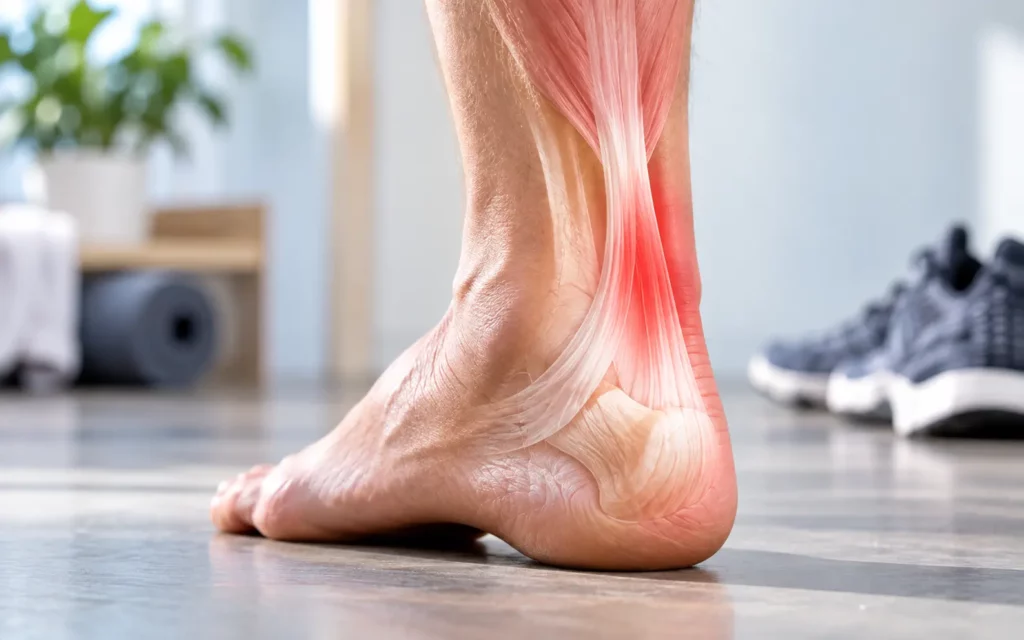
Achilles tendonitis (also spelled Achilles tendinitis) is inflammation and irritation of the Achilles tendon, the thick band of tissue that connects your calf muscles to your heel bone. It’s a tendon, not a ligament; tendons connect muscle to bone, while ligaments connect bone to bone, which is a useful distinction if you’ve seen the condition mixed up with a ligament injury elsewhere.
It typically develops gradually from repeated stress on the tendon, rather than from a single injury, and is especially common among runners and people who’ve recently increased the intensity or frequency of their physical activity.
The Achilles tendon runs down the back of your lower leg, connecting your calf muscles (the gastrocnemius and soleus) to your heel bone. You can usually feel it as a firm, rope-like band just above your heel, most noticeable when you’re on your toes or flexing your foot.
These terms are often used interchangeably, but they don’t mean exactly the same thing:
In everyday use, “Achilles tendonitis” and “Achilles tendinitis” are generally used to describe the same condition, regardless of whether inflammation or degeneration is the primary underlying process, and your doctor may use any of these terms depending on what they find.
Achilles tendonitis is generally classified into two types, based on where along the tendon the problem occurs.
Insertional Achilles tendonitis (also called insertional Achilles tendinopathy) affects the lower part of the tendon, where it attaches to the heel bone. It can sometimes occur alongside a bone spur at the back of the heel, and tends to respond somewhat differently to exercise-based treatment than the mid-portion type.
This type affects the middle section of the tendon, typically 2 to 6 centimetres above where it attaches to the heel. It’s more common in younger, active people, particularly runners.
Achilles tendonitis usually affects one leg at a time, but it’s possible to experience it in both legs (bilateral Achilles tendonitis) at once, especially if the same overuse factors, such as training load or footwear, are affecting both sides equally.

Symptoms usually develop gradually rather than appearing suddenly, and tend to worsen with continued activity if left unaddressed. Common symptoms include:
Pain when walking or running, and a tight or sore feeling in the tendon, are usually the first signs people notice. If you experience sudden, sharp pain along with a popping sensation and are unable to bear weight or push off on the affected foot, this can indicate a tendon rupture rather than tendonitis, and needs prompt medical attention.
Achilles tendonitis is generally caused by repetitive strain on the tendon rather than a single specific injury. Common contributing factors include:
Because it’s difficult to avoid using the Achilles tendon in daily life, ongoing stress on the tendon can outpace the body’s ability to repair it, which is part of why the condition often becomes persistent if the underlying activity pattern isn’t adjusted.
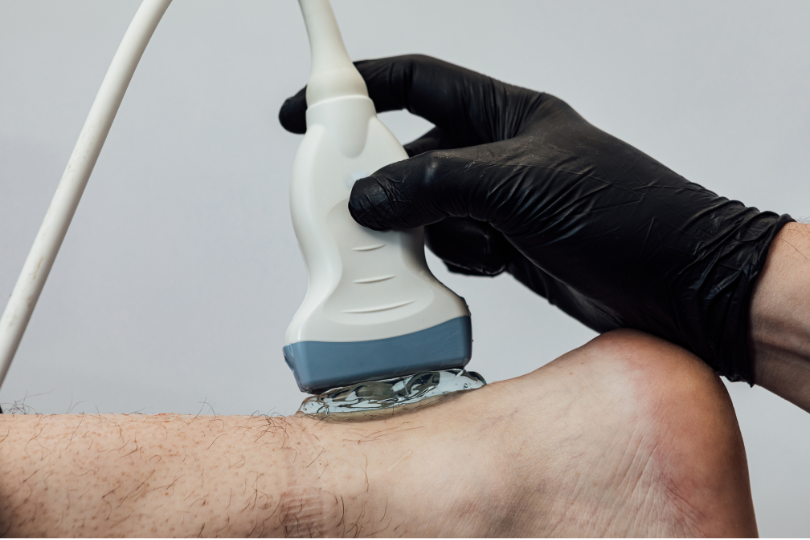
Achilles tendonitis is usually diagnosed based on a physical examination and a discussion of your symptoms and activity history. A doctor may press along the tendon to check for tenderness, swelling, or thickening, and may ask you to stand on your toes to assess strength and movement.
Imaging, such as ultrasound or MRI, isn’t always necessary, but may be used if the diagnosis is unclear, if symptoms are severe or long-lasting, or to rule out a tendon rupture or other conditions with similar symptoms.
Most cases of Achilles tendonitis improve with non-surgical treatment, though it typically takes weeks to months rather than a quick fix, especially if symptoms have already been present for a while.
For mild to moderate symptoms, self-care is usually the first step:
Supportive footwear, heel lifts, or orthotic inserts may also help reduce strain on the tendon during daily activities.
If self-care alone isn’t enough, a doctor may recommend:
Surgery is generally only considered when several months of consistent non-surgical treatment haven’t improved symptoms, or in the case of a tendon rupture. This is a decision made together with an orthopaedic specialist based on the specifics of your case.

Once acute pain has settled somewhat, targeted exercises, particularly eccentric strengthening, are one of the most well-supported approaches for Achilles tendonitis. A widely used approach is the eccentric heel drop:
This is often done twice a day as part of a structured, several-week programme, and some mild discomfort during the exercise is common, though sharp or worsening pain isn’t. Gentle calf stretching can also help with flexibility, but exercise-based strengthening, rather than stretching alone, tends to be more effective for long-term improvement.
It’s best to start or adjust an exercise programme with guidance from a doctor or physiotherapist, particularly if your pain is severe, has lasted more than a few weeks, or hasn’t responded to rest.
Recovery time varies depending on how long symptoms have been present and how consistently treatment is followed. For mild, recently developed Achilles tendonitis, meaningful improvement is often seen within a few weeks of rest and self-care, though full resolution can still take a couple of months. More persistent or long-standing cases, or those requiring a structured exercise programme, often take several months, commonly around 3 months, to see substantial improvement.
There’s no reliable way to “cure” Achilles tendonitis overnight; consistent, gradual treatment tends to produce better and more lasting results than trying to push through pain or return to full activity too quickly.
While mild Achilles tendonitis is often manageable with self-care, it’s a good idea to see a doctor if:
Seek urgent medical attention if you feel or hear a sudden pop in the back of your ankle, experience sudden severe pain, or are unable to push off or stand on your toes on the affected side, as these can be signs of a tendon rupture.
Achilles tendonitis is inflammation or irritation of the Achilles tendon, the band of tissue connecting the calf muscles to the heel bone, usually caused by repetitive strain from activities like running or jumping.
No. The Achilles tendon is a tendon, which connects muscle to bone, not a ligament, which connects bone to bone. The condition affects the tendon, not a ligament.
Tendinitis generally refers to active inflammation, often in earlier or acute cases, while tendinosis refers to gradual degeneration of the tendon’s structure, more typical of chronic or long-standing cases. In everyday use, both are often grouped under “Achilles tendonitis.”
It commonly feels like aching, stiffness, or tenderness at the back of the heel or ankle, often worse after activity or first thing in the morning, and may ease somewhat as you warm up before returning afterward.
Not usually. Most cases improve gradually over several weeks to a few months with consistent rest, self-care, and, later, targeted exercises. There’s no reliable way to resolve it overnight, and pushing through pain can make it worse.
Eccentric heel drop exercises are among the most commonly recommended, alongside gentle calf stretching. These are usually best started under the guidance of a doctor or physiotherapist, especially in the early or painful stages.
Yes, it’s possible to have bilateral Achilles tendonitis, particularly if the same contributing factors, such as a sudden increase in activity or unsupportive footwear, are affecting both legs.
Achilles tendonitis is a common, usually manageable overuse injury, but it tends to respond best to a gradual, consistent approach rather than trying to push through the pain or find a fast fix. Recognising the early symptoms, adjusting activity levels, and following a structured treatment and exercise plan can make a meaningful difference in recovery time.
If your Achilles pain is severe, persistent, or not improving with rest and self-care, you can consult a doctor through the MaNaDr App to discuss your symptoms and next steps.