


You started birth control expecting more predictable bleeding, then notice spotting in the middle of the month. Changes in bleeding patterns are common with hormonal contraception, particularly when starting or changing a method, but persistent or unusual bleeding may sometimes need medical assessment.

It depends on the method, and on how you use it.
Having lighter, less frequent or no bleeding can be an expected effect of some hormonal contraceptives and does not necessarily mean that blood is building up inside the uterus. However, an unexpected change in your usual bleeding pattern may still need assessment, particularly if pregnancy is possible or you have other symptoms.
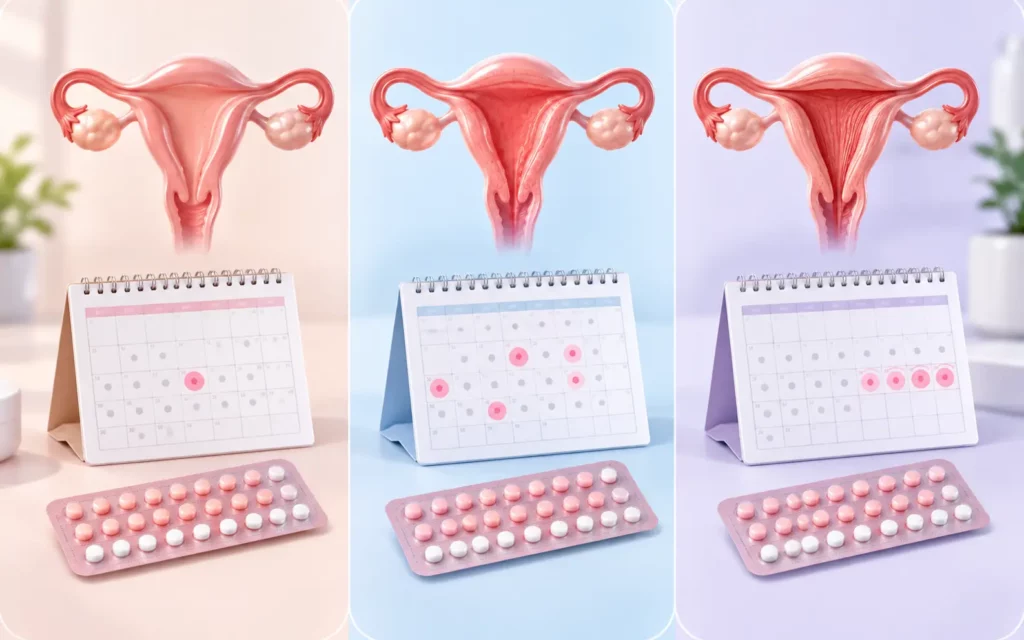
These terms are often used interchangeably, but they describe different things:
| Type | What it looks like | When it happens |
| Spotting | A few drops of pink, red, or brown blood, usually not enough to fill a pad | Any time between expected bleeds |
| Breakthrough bleeding | Unscheduled bleeding while on hormonal birth control, from light spotting up to a flow similar to a light period | While taking active hormones, outside the expected bleed |
| Withdrawal bleeding | The expected bleed when hormone levels drop | In the hormone-free week of the pack, or after stopping active hormones |
Spotting is essentially a mild form of breakthrough bleeding. Both are common, especially in the first few months of a new method.

The most common reason is simple: your body is adjusting. Hormonal contraception changes the endometrium, or lining of the uterus. Especially when starting or changing a method, these hormonal effects can make the lining less stable and lead to unscheduled spotting or bleeding. Other common causes include:
Each episode can last anything from a single day of light spotting to several days. There is no single duration that applies to everyone. Spotting may last for a day or several days at a time, and irregular bleeding can continue for several months after starting some contraceptive methods. Speak to a doctor if bleeding is persistent, becomes heavy, starts after a previously stable bleeding pattern, or is accompanied by other symptoms.
How long it keeps happening depends on the method:
If you are still having unpredictable bleeding after about three months on the same method, it is reasonable to review it with a doctor rather than waiting longer.

There is no instant fix, and bleeding that starts mid-pack usually cannot be switched off immediately. What helps is addressing the cause:
If bleeding continues, your doctor may suggest changing the pill formulation, switching to a different method, adjusting how you take an extended-cycle pill (for example, a short hormone-free break), or a short course of medicine to help settle the bleeding when suitable. These decisions depend on your health history, so they should be made with a doctor rather than by adjusting your pills on your own.
Emergency contraception pills, often called the morning-after pill, can temporarily change your bleeding pattern. Depending on the type used, you may notice spotting or bleeding after taking the medicine, and your next period may arrive earlier or later than expected. Some people have light spotting within a few days, and others notice it around a week later. It is usually lighter than a normal period and may look pink or brown.
What to expect and what to do:
Emergency contraception is meant for occasional use, not as a regular method. To learn more about the options available and how soon to act, see MaNaDr’s guide to emergency contraception.
No. There is no good evidence that hormonal birth control causes long-term infertility, and fertility generally returns after you stop. It also does not use up your egg supply.
Two other points are worth knowing. First, the pill can mask conditions such as polycystic ovary syndrome or thyroid problems, so irregular cycles after stopping may be an existing issue that becomes visible, not something the pill caused. Second, ovulation can return quickly after stopping, so use another form of contraception if you are not ready for pregnancy. If you have been trying to conceive for a year without success (or six months if you are over 35), speak to a doctor.

Bleeding on birth control is usually not urgent, but see a doctor if you have:
Seek emergency care if you have sudden severe lower abdominal pain, dizziness or fainting, or heavy bleeding along with a positive pregnancy test.
Breakthrough bleeding alone does not usually mean your contraception has stopped working. However, missed or late pills, vomiting or diarrhoea, and certain interacting medicines can affect protection depending on the contraceptive you use.
Yes, pregnancy is still possible, although spotting itself does not mean you are pregnant. Consider a pregnancy test if you have missed pills, used your contraception incorrectly, had unprotected sex or missed an expected bleed.
A new change after months of stable use is worth discussing with a doctor. Possible explanations include inconsistent contraceptive use, pregnancy, infection, medication interactions or other gynaecological causes.
Do not stop or change how you take your pill solely because of breakthrough bleeding without checking the instructions for your specific pill or speaking to a healthcare professional. Stopping incorrectly may reduce contraceptive protection.
Yes. Emergency contraceptive pills can temporarily change your bleeding pattern, including spotting and changes in the timing of your next period. Bleeding alone cannot tell you whether emergency contraception has prevented pregnancy.
Spotting and breakthrough bleeding are among the most common side effects of hormonal birth control, and they are usually temporary and harmless. Most of the time they ease within a few months, and consistent pill timing goes a long way. It is still worth getting checked if the bleeding is heavy, lasts more than a week, or does not improve, since a change in method or a quick check for other causes often solves it.
If you are unsure whether your bleeding pattern is expected, you can consult a doctor online through MaNaDr to review your symptoms, contraceptive use and pregnancy risk, and discuss whether further testing, an in-person examination or a change in contraception may be appropriate.