Cognitive Behavioral Therapy (CBT) Explained: The Key to Long-Term Healing Without Surgery or Pills! - Manadr
Cognitive Behavioral Therapy (CBT) Explained: The Key to Long-Term Healing Without Surgery or Pills!
MaNaDr2022-05-30
Cognitive Behavioral Therapy (CBT) is a widely-used, evidence-based form of psychotherapy (talk therapy) that helps individuals understand and change the relationship between their thoughts, feelings, and behaviors. It’s a structured, short-term approach that focuses on solving present-day problems and developing practical coping skills. Often abbreviated to “CBT,” this powerful therapeutic tool has been proven effective for a vast range of mental health conditions, helping millions of people regain control over their lives.
1. What Is Cognitive Behavioral Therapy (CBT)?
1.1. Defining Cognitive Behavioral Therapy
Cognitive Behavioral Therapy (CBT) is a goal-oriented, structured, and short-term psychotherapy that focuses on the interconnectedness of thoughts, feelings, and behaviors. The fundamental premise of CBT is that our thoughts, not external events, determine how we feel and act. By identifying and changing unhelpful or inaccurate thinking patterns (cognitive component) and modifying problematic behaviors (behavioral component), individuals can learn new ways to cope with challenging situations and improve their emotional regulation.
Cognitive Component: The “cognitive therapy” part of CBT focuses on identifying and challenging unhelpful or distorted thought patterns. A cognitive therapist helps patients recognize thinking errors (e.g., catastrophizing, all-or-nothing thinking) that are fueling negative emotions.
Behavioral Component: The “behavioral therapy” part focuses on changing problematic behaviors through techniques like exposure therapy, skills training, and behavioral activation.
Essentially, “what is CBT” is a practical approach to mental health that provides individuals with a toolkit of skills to manage their mental and emotional well-being. The cbt meaning is rooted in this dual focus on cognition and behavior.
1.2. The Core Principles of CBT
CBT operates on several core principles that guide the therapeutic process:
The Cognitive Model: The central idea that our emotions and behaviors are influenced by our perceptions of events, not the events themselves.
Problem-Focused and Goal-Oriented:CBT is not about endlessly talking about the past; it’s about setting specific, measurable goals and developing strategies to solve current problems.
Short-Term and Time-Limited:CBT is often delivered over a limited number of sessions (e.g., 12-20 sessions) to teach a patient a specific set of skills they can use independently.
Psychoeducation: A significant part of the CBT process involves teaching patients about their condition and the cognitive model, empowering them to become their own therapists.
Collaborative: The therapist and patient work together as a team to identify problems, set goals, and develop strategies.
1.3. How Common is CBT? (Statistics and Efficacy)
CBT is one of the most widely used and well-researched forms of psychotherapy. Its effectiveness for a broad range of conditions has led to its recommendation by numerous national and international health organizations.
Evidence-Based:CBT is considered an evidence-based practice, meaning its effectiveness is supported by numerous scientific studies and clinical trials. It has been shown to be as effective as, and in some cases more effective than, medication for many conditions.
Efficacy: A 2022 review of research from the American Psychological Association (APA) confirmed the robust efficacy of CBT for various conditions, including anxiety disorders, depression, and post traumatic stress disorder cognitive behavioral therapy (American Psychological Association).
Broad Application: Due to its flexible and structured nature, CBT is used to treat a wide range of mental health issues, from common anxiety disorders to complex chronic pain conditions.
Q: What’s the difference between cognitive therapy and behavioral therapy?
Expert Answer:Cognitive therapy focuses on the role of thoughts in influencing our feelings and actions, aiming to change distorted thinking. Behavioral therapy focuses on the role of learning in developing problematic behaviors, aiming to change those behaviors. CBT combines both approaches, recognizing that thoughts and behaviors are interconnected, and a change in one often leads to a change in the other. (American Psychological Association – APA).
2. How Does Cognitive Behavioral Therapy Work?
Understanding “how does cognitive behavioral therapy work” is key to appreciating its practical, hands-on approach. Unlike more traditional talk therapies, CBT is an active process focused on skill-building and real-world application.
2.1. The Cognitive Model in Action
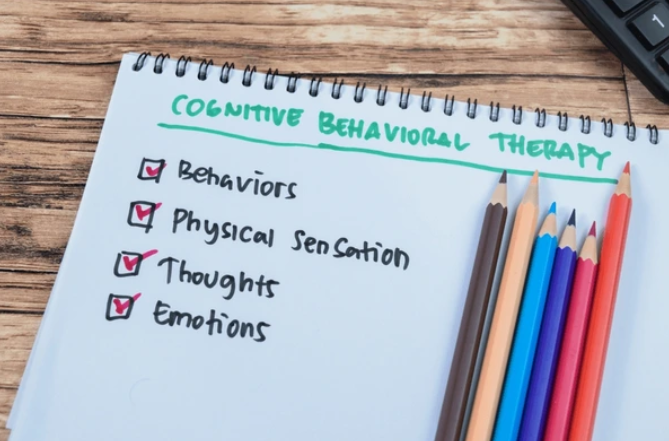
The central idea of CBT is that our thoughts, emotions, and behaviors are all interconnected and influence each other.
Situation: An event or trigger occurs (e.g., a friend doesn’t respond to a text).
Thought: Your interpretation of the situation (e.g., “My friend is mad at me. I must have done something wrong. I’m a bad friend.”). This is the cognitive part.
Emotion: The feeling that arises from the thought (e.g., sadness, anxiety).
Behavior: Your reaction to the emotion (e.g., you stop reaching out to your friend, you isolate yourself). This is the behavioral part.
A CBT therapist helps you intervene at the “Thought” stage, teaching you to recognize distorted thoughts and replace them with more balanced, realistic ones. This, in turn, changes your emotions and leads to healthier behaviors.
2.2. Core Techniques and Methods
The cognitive behavioral approach uses various techniques to help you master these skills:
Cognitive Restructuring: Learning to identify “cognitive distortions” (thinking errors) and challenging them with evidence-based reasoning.
Exposure Therapy: Gradually and safely exposing yourself to situations you fear to reduce anxiety over time. This is a common method for treating phobias and anxiety disorders.
Behavioral Activation: Increasing your engagement in pleasurable or meaningful activities to combat depression and improve mood.
Skills Training: Learning and practicing practical skills like problem-solving, relaxation techniques, and communication skills.
Role-Playing: Practicing new behaviors and communication styles in a safe, therapeutic setting.
Journaling: Keeping a thought diary to track situations, thoughts, emotions, and behaviors, which helps in identifying patterns.
2.3. The Structure of a CBT Session
A typical CBT session is structured and collaborative:
Setting an Agenda: The therapist and patient agree on what to discuss.
Reviewing Homework:CBT involves “homework” (e.g., practicing skills, journaling), which is reviewed to track progress.
Working on Agenda Items: Using CBT techniques to address the agreed-upon topics.
Assigning New Homework: Assigning new skills to practice between sessions.
Summarizing: The therapist and patient summarize the session’s key takeaways.
This structured approach makes CBT a very practical and effective therapy.
Expert Answer: A cognitive behavioral therapist acts as a coach or teacher, guiding patients to identify connections between their thoughts, feelings, and behaviors. They work collaboratively with the patient, using evidence-based techniques to help them develop practical skills and coping strategies to manage their mental health challenges in the present. The focus is on empowering the patient to become their own therapist. (American Psychological Association).
Q: How long does CBT last?
Expert Answer:CBT is generally a short-term, time-limited therapy. A typical course of treatment can last anywhere from 6 to 20 sessions, depending on the individual’s needs and the condition being treated. The goal is to equip the patient with a set of skills they can continue to use long after therapy is over. (National Institute of Mental Health – NIMH).
3. What Conditions Is CBT Used to Treat?
Cognitive Behavioral Therapy is a highly versatile and effective therapeutic tool, used to treat a wide spectrum of mental and physical health conditions. Its evidence-based nature makes it a recommended first-line treatment for many disorders.
3.1. Mental Health Conditions
CBT is particularly effective for a variety of mental health conditions, including:
Anxiety Disorders: Generalized Anxiety Disorder, Panic Disorder, Social Anxiety Disorder, and phobias. CBT helps individuals challenge anxious thoughts and gradually face feared situations.
Depression:CBT helps individuals with depression to identify and change negative thought patterns, and to engage in positive, mood-boosting behaviors. It is also used to treat bipolar depression.
Post-Traumatic Stress Disorder (PTSD): Trauma-focused CBT helps individuals process traumatic memories and change the thought patterns and avoidance behaviors associated with PTSD.
Obsessive-Compulsive Disorder (OCD): Exposure and Response Prevention (ERP), a key component of CBT, is a highly effective treatment for OCD.
Eating Disorders:CBT helps individuals address distorted body image, unhelpful thoughts about food, and compulsive behaviors.
Other Conditions:CBT is also used to treat sleep disorders (insomnia), anger management, and substance use disorders.
3.2. Physical and Medical Conditions
The principles of CBT are also applied to help individuals manage physical conditions by changing how they think about and react to their symptoms.
Chronic Pain:CBT can help individuals with chronic pain to manage their thoughts about pain and develop coping strategies, reducing pain-related distress and improving function.
Chronic Fatigue Syndrome:CBT helps individuals manage fatigue by setting realistic activity goals and challenging negative beliefs about their energy levels.
Irritable Bowel Syndrome (IBS):CBT helps individuals manage the stress and anxiety that can exacerbate IBS symptoms.
The cognitive-behavioral treatment approach’s flexibility makes it applicable to many areas of health.
Expert Answer: Yes, CBT has been adapted and is highly effective for children and adolescents to treat a range of conditions, including anxiety disorders, depression, and ADHD. Therapists often use age-appropriate tools like play, stories, and art to teach the core CBT concepts and skills. (American Academy of Child and Adolescent Psychiatry – AACAP).
4. What Are the Different Types of CBT?
While the core principles of CBT remain consistent, the therapy has evolved into several different types, each with its own specific focus and methodology. Understanding these different cognitive behavioral therapy approaches can help individuals find the best fit for their needs.
4.1. Core Types of CBT
The primary distinction is between the cognitive and behavioral components, but a broader range of therapies falls under the CBT umbrella:
Standard CBT: The classic approach that focuses on the interconnectedness of thoughts, feelings, and behaviors to address a wide range of conditions.
Dialectical Behavior Therapy (DBT): A form of CBT that was originally developed to treat Borderline Personality Disorder but is now used for other conditions involving emotional dysregulation. DBT incorporates elements of mindfulness, acceptance, and distress tolerance skills.
Acceptance and Commitment Therapy (ACT): This approach focuses on accepting thoughts and feelings without judgment and committing to actions that align with one’s personal values. It’s an evolution of CBT that prioritizes acceptance and mindfulness over direct thought-challenging.
Mindfulness-Based Cognitive Therapy (MBCT): Combines traditional CBT techniques with mindfulness practices to help individuals become more aware of their thoughts and feelings without getting caught up in them. It is particularly effective for preventing relapse in depression.
4.2. Specialized Forms of CBT
Trauma-Focused CBT (TF-CBT): A specialized form of CBT for children and adolescents who have experienced trauma. It helps them process their trauma, develop coping skills, and address trauma-related symptoms.
Exposure and Response Prevention (ERP): A specific type of behavioral therapy used to treat Obsessive-Compulsive Disorder (OCD). It involves gradually exposing the individual to their fear-inducing triggers while preventing them from engaging in their compulsive behaviors. This is one of the most effective behavioral therapies for OCD.
Cognitive Processing Therapy (CPT): A form of CBT that helps individuals with PTSD to challenge and modify unhelpful beliefs and thoughts about their trauma.
5. How Do You Find a CBT Therapist?
Finding the right CBT therapist is a crucial step in beginning your healing journey. A good fit can significantly impact the success of your therapy.
5.1. Finding a Qualified Therapist
Professional Directories: Use professional directories provided by organizations like the American Psychological Association (APA), the National Association of Social Workers (NASW), or the Association for Behavioral and Cognitive Therapies (ABCT). These directories allow you to search for licensed professionals in your area who specialize in CBT.
Referrals: Your primary care doctor, psychiatrist, or a trusted friend can provide referrals.
Health Insurance Provider: Check your health insurance company’s website for a list of in-network mental health professionals.
5.2. Key Questions to Ask a Potential CBT Therapist
When you’ve identified a potential CBT therapist, asking the right questions can help you determine if they are a good fit:
What is your experience with the condition I’m dealing with? (e.g., anxiety, depression, PTSD).
What is your training and certification in CBT?
How long do you expect our therapy to last?
What does a typical CBT session look like with you?
5.3. The Importance of a Good Fit
A therapeutic relationship is built on trust and rapport. It’s essential to find a CBT therapist with whom you feel comfortable and understood. Don’t hesitate to have an initial consultation to see if the therapist’s style and approach align with your needs.
Q: How is CBT different from traditional talk therapy?
Expert Answer: While both involve talking, CBT is distinct from traditional, long-term talk therapies (like psychoanalysis) by being highly structured, time-limited, and problem-focused. CBT is more like a collaborative coaching process where the therapist actively teaches specific skills and gives homework. It focuses on the present and aims to teach you how to change unhelpful thoughts and behaviors, rather than exploring past events in depth for long periods. (National Institute of Mental Health – NIMH).
Q: How can MaNaDr help me find a CBT therapist?
Expert Answer:MaNaDr can be a valuable resource for your search. Our AI-powered platform can connect you with qualified doctors instantly who can provide an initial consultation to discuss your mental health concerns. From there, they can offer professional guidance, and in many cases, help you find a suitable CBT therapist or other mental health specialist who can provide the right care for you. (MaNaDr platform).
Conclusion
Cognitive Behavioral Therapy is a powerful, evidence-based tool for improving mental health. Understanding what is CBT, recognizing how it works by focusing on the links between thoughts, feelings, and behaviors, and knowing what conditions it can treat, empowers you to take an active role in your own healing.
As a problem-focused, goal-oriented, and short-term therapy, CBT provides you with a set of practical skills to manage mental health challenges long after therapy has concluded. If you are struggling with a mental or emotional health condition, you are not alone, and there is effective help available.
Finding a qualified therapist is a crucial first step. MaNaDr is here to support you with immediate access to a network of qualified doctors through our AI-powered teleconsultation platform, ensuring you can connect with the right mental health specialist 24/7 for the guidance you need. Take the first step towards a healthier, more resilient mind today.
Disclaimer: This article is for informational purposes only and does not constitute medical advice. Always consult with a qualified healthcare professional for diagnosis and treatment of any medical condition.
References
National Alliance on Mental Illness (NAMI). (n.d.). Cognitive Behavioral Therapy (CBT). Retrieved fromhttps://www.nami.org/Blogs/NAMI-Blog/May-2012/Cognitive-Behavior-Therapy-and-Young-Adults-An-In
American Academy of Child and Adolescent Psychiatry (AACAP). (n.d.). Facts for Families: Cognitive Behavioral Therapy. Retrieved fromhttps://www.aacap.org/AACAP/Families_and_Youth/Facts_for_Families/FFF-Guide/Psychotherapies-For-Children-And-Adolescents-086.aspx