MaNaDr Medical Notes - What is Nearsightedness (Myopia): Symptoms, Causes & Prevention + Protect Your Vision: Simple Steps Can Make a Big Difference - Manadr
What is Nearsightedness (Myopia): Symptoms, Causes & Prevention + Protect Your Vision: Simple Steps Can Make a Big Difference
MaNaDr2022-05-14
Myopia, commonly known as nearsightedness, is a widespread vision condition where close objects appear clear, but distant objects appear blurry. Far from just a minor inconvenience, its increasing prevalence globally has made it a significant public health concern. This condition, often termed “nearsightedness,” can profoundly impact daily life, learning, and overall well-being.
1. What Exactly Is Myopia (Nearsightedness)?
To understand this prevalent vision condition, it’s essential to grasp its fundamental definition and how it affects the way light focuses within the eye. Many individuals use the terms “nearsighted” and “myopic” interchangeably.
1.1. Defining Myopia
Myopia is a common refractive error of the eye. It’s a condition where light entering the eye focuses in front of the retina instead of directly on it, causing distant objects to appear blurry while close objects remain clear. Essentially, “what does nearsighted mean” is that an individual can see things clearly when they are near, but their vision becomes unclear for objects far away. The terms nearsighted myopic, nearsighted, near sighted, and short eye sight all refer to the same condition. It’s not a nearsighted disease in the sense of a pathological illness, but rather a refractive error.
1.2. How Myopia Affects Vision
To clarify what is nearsighted, envision the process of light entering the eye:
Normal Vision: In an eye with perfect vision, light rays from distant objects are precisely bent (refracted) by the cornea and lens to focus directly onto the retina, providing a clear image.
Myopic Vision: In a myopic eye, either the eyeball is too long from front to back, or the cornea (the clear front surface of the eye) is too steeply curved. Both scenarios cause light rays to focus at a point in front of the retina. By the time these light rays reach the retina, they have already crossed and begun to diverge, resulting in a blurry image of distant objects. This gives rise to nearsighted vision.
1.3. How Common is Myopia? (Prevalence & Global Epidemic)
Myopia has become a rapidly growing public health concern worldwide, reaching epidemic proportions in many regions. Its increasing prevalence underscores its status as a global vision challenge.
Global Prevalence: The World Health Organization (WHO) has identified myopia as a significant global health priority. Estimates suggest that by 2050, nearly half of the world’s population (approximately 5 billion people) could be myopic, with around 1 billion having high myopia (WHO). This represents a dramatic increase in prevalence over recent decades.
Current Statistics: Currently, myopia affects approximately 30-40% of adults in the United States and Europe, but its rates are even higher in East Asian countries, where it affects up to 80-90% of school-leavers (National Eye Institute – NEI/NIH). This makes myopia a pervasive condition.
Leading Cause of Impairment:Myopia is a leading cause of vision impairment globally, and high myopia increases the risk of serious eye conditions later in life.
2. What Are the Symptoms and Signs of Myopia?
Recognizing the myopia symptoms is the first step toward getting appropriate vision correction. The signs of myopia can develop gradually or rapidly, often becoming noticeable during daily activities that require clear distant vision.
2.1. Primary Symptoms of Myopia
The hallmark myopia symptoms are related to blurry distant vision:
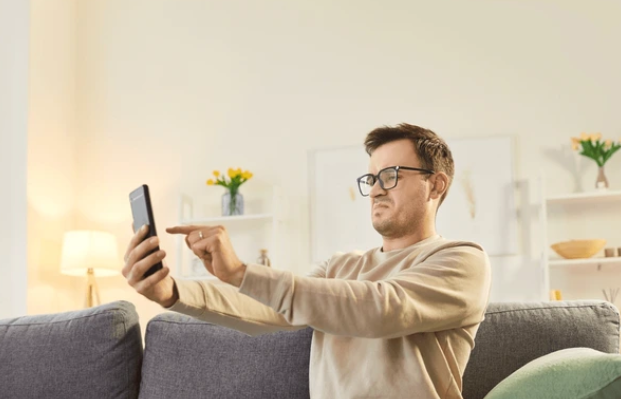
Distant Blurriness: The primary symptom is difficulty seeing distant objects clearly. This can manifest as trouble reading road signs, seeing the whiteboard in a classroom, or recognizing faces from across a room.
Squinting: Individuals with myopia often squint their eyes to try and see distant objects more clearly. This temporarily changes the shape of the eye’s opening to reduce blur.
Eyestrain and Headaches: Chronic straining to see distant objects can lead to eyestrain, eye fatigue, and frontal headaches.
Fatigue: General visual fatigue, especially after prolonged periods of looking at distant objects.
2.2. Signs of Myopia in Children
It’s particularly important for parents and educators to recognize signs of myopia in children, as they may not articulate their vision problems. These myopia symptoms in children can include:
Sitting closer to the television or computer screen.
Holding books very close to their face while reading.
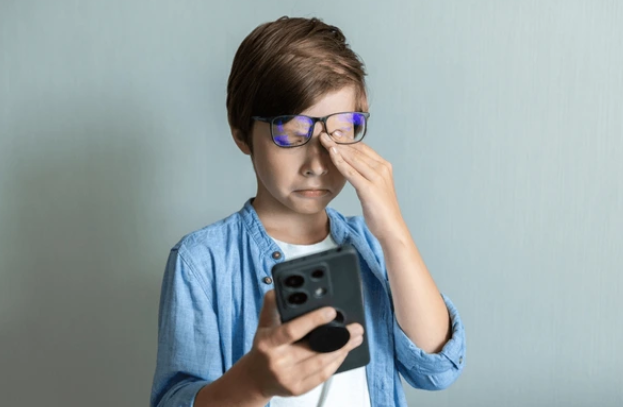
Squinting, frowning, or rubbing their eyes excessively.
Appearing unaware of distant objects or people.
Poor performance in school sports that require good distant vision (e.g., missing a ball).
Frequent blinking or excessive tearing.
2.3. Progressive Myopia Symptoms
For some individuals, myopia can progress, meaning their vision worsens over time. Progressive myopia symptoms often involve:
Increasing blurriness of distant vision.
Needing frequent changes in eyeglasses or contact lens prescriptions.
Experiencing a rapid worsening of vision, particularly during growth spurts in childhood and adolescence.
2.4. When to Seek Medical Attention
If you or your child experience any persistent vision changes or concerning symptoms, seeking professional eye care is crucial:
Any new or worsening difficulty seeing distant objects clearly.
Persistent headaches or eyestrain related to vision tasks.
Changes in a child’s behavior that might indicate vision problems (e.g., sitting too close to screens, squinting).
If you have a family history of myopia or other eye conditions.
An eye care professional can conduct a comprehensive eye exam to diagnose myopia and recommend appropriate management.
3. What Causes Myopia (Nearsightedness)?
Understanding what causes myopia involves a complex interplay of genetic predisposition and environmental factors. It’s not attributed to a single cause but rather a combination of influences that lead to the eye focusing light incorrectly. This includes nearsightedness causes that are both inherited and related to modern lifestyles.
3.1. Complex Causes: Not Fully Understood
The precise causes of myopia are still being extensively researched, but it’s understood to be a multifactorial condition. It results from the eye growing too long from front to back, or the cornea becoming too curved, causing light to focus in front of the retina. This abnormal growth or curvature is influenced by a combination of factors.
3.2. Genetic Factors
Genetics play a significant role in the development of myopia. It is highly hereditary:
Family History: If one or both parents have myopia, a child’s risk of developing the condition is significantly increased. The risk is even higher if both parents are nearsighted.
Genetic Predisposition: Specific genes have been identified that are associated with an increased risk of myopia, influencing eye growth and development. However, possessing these genes does not guarantee myopia will develop, as environmental factors also play a critical role.
3.3. Environmental and Lifestyle Factors
Modern lifestyle trends are increasingly recognized as major contributors to the rising global prevalence of myopia:
Increased Near Work: Prolonged and intensive engagement in “near work” activities is a strong environmental factor. This includes:
Reading for extended periods.
Excessive use of computers, tablets, and smartphones, especially at close viewing distances.
Other close-up tasks like intricate crafts or studying.
This constant focus on nearby objects is thought to strain the eye’s focusing mechanism and encourage eyeball elongation.
Time Spent Indoors: A strong inverse correlation has been observed between time spent outdoors and the development and progression of myopia. Less exposure to natural light and outdoor environments is a key risk factor. Natural light is believed to influence dopamine release in the retina, which may play a protective role against excessive eye growth.
Lack of Natural Light Exposure: Specifically, the intensity and broad spectrum of natural outdoor light are thought to have a protective effect on eye development, reducing the risk of myopia onset and progression.
3.4. Other Contributing Factors
Certain Medical Conditions: Some underlying medical conditions, though rare, can be associated with myopia, such as certain genetic syndromes or metabolic disorders.
Prematurity: Babies born prematurely may have a higher risk of developing myopia.
Expert Answer: Reading in the dark or in dim light does not directly cause myopia. However, it can lead to significant eyestrain, eye fatigue, and headaches. In a scientific context, some theories suggest that reading in dim light or a dark room may trigger myopia by activating the retinal rod pathway, disrupting the circadian rhythm, and reducing retinal dopamine release, all of which can influence eye growth. While it may not be the direct cause, it is a factor that can contribute to the development or progression of myopia. (American Optometric Association).
4. How Is Myopia Treated?
Myopia treatment aims to correct blurry distant vision and, increasingly, to slow the progression of the condition, especially in children. For those seeking “how to fix myopia,” various options exist to achieve clear vision and preserve long-term eye health.
4.1. Goals of Myopia Treatment
The primary goals of myopia treatment are:
Correct Vision for Clarity: To enable individuals to see distant objects clearly, restoring normal visual function for daily activities.
Slow Progression (Especially in Children): For children and adolescents, a crucial goal is to slow down the rate at which myopia worsens, thereby reducing the risk of high myopia and associated eye health complications later in life.
4.2. Corrective Lenses
These are the most common and immediate solutions for correcting blurry vision caused by myopia:
Eyeglasses: The most widely used method. Eyeglasses for myopia contain concave (minus power) lenses that diverge light rays before they enter the eye, causing them to focus precisely on the retina, resulting in clear distant vision.
Contact Lenses: These are thin plastic lenses worn directly on the eye. They offer a wider field of vision compared to eyeglasses and can be a preferred option for active individuals.
Both eyeglasses and contact lenses provide clear myopia vision but do not change the underlying eye condition.
4.3. Refractive Surgery (Vision Correction Surgery)
For adults with stable myopia, refractive surgery offers a more permanent solution for vision correction by reshaping the cornea.
LASIK (Laser-Assisted In Situ Keratomileusis): The most common type of refractive surgery. A thin flap is created on the cornea, reshaped with a laser, and the flap is then put back.
PRK (Photorefractive Keratectomy): Involves reshaping the corneal surface directly with a laser.
SMILE (Small Incision Lenticule Extraction): A newer minimally invasive technique that uses a laser to create a small, lens-shaped piece of tissue within the cornea, which is then removed through a small incision.
Implantable Lenses (ICLs): For individuals with high myopia who are not candidates for laser eye surgery, implantable collamer lenses (ICLs) can be surgically placed inside the eye to correct vision.
These surgeries aim to reduce or eliminate the need for eyeglasses or contact lenses.
4.4. Myopia Control Therapies (For Children and Adolescents)
These specialized myopia treatments are specifically designed to slow down the progression of myopia in children and adolescents, reducing the risk of developing high myopia and its associated complications.
Low-Dose Atropine Eye Drops: Daily use of low-concentration atropine eye drops has been shown to be effective in slowing the progression of myopia in children.
* It’s important to note that in some countries, the use of atropine for this purpose is still considered off-label, meaning it is not an officially approved indication by the regulatory body.
Specialized Multifocal Contact Lenses: Certain designs of multifocal contact lenses, different from those used for presbyopia, have been developed to slow down myopia progression in children.
Orthokeratology (Ortho-K): Involves wearing rigid gas permeable contact lenses overnight. These lenses temporarily reshape the cornea while the child sleeps, providing clear vision during the day without glasses or contacts, and also helping to slow myopia progression.
Expert Answer:Myopia (nearsightedness) cannot be truly “cured” in the sense that the eye’s shape returns to normal. However, vision can be effectively corrected with eyeglasses, contact lenses, or refractive surgery. For children, myopia control therapies can significantly slow its progression, reducing the ultimate severity of the condition. (American Academy of Ophthalmology).
Q: Is myopia treatment painful?
Expert Answer: No, myopia treatment is generally not painful. Wearing corrective lenses (eyeglasses or contacts) is painless. Refractive surgeries like LASIK involve numbing eye drops, and patients typically report pressure rather than pain during the procedure, with mild discomfort during recovery. Myopia control eye drops are painless, and Ortho-K lenses are worn overnight for comfort. (National Eye Institute).
If you are considering myopia treatment options, have questions about myopia control for your child, or need a new prescription, MaNaDr offers a convenient way to consult with online doctors 24/7. They can help discuss your options and guide you to an eye care specialist.
5. What Are the Different Types of Myopia?
Myopia is not a single entity; it encompasses various types of myopia based on its severity, progression, and underlying cause. Understanding these classifications is important for appropriate management and risk assessment.
5.1. Common Myopia Classifications
Simple Myopia: This is the most common form of myopia. It occurs when the eye is slightly too long or the cornea is slightly too curved, causing light to focus in front of the retina. It typically develops in childhood or adolescence and stabilizes in early adulthood.
High Myopia: This is a more severe form of myopia, usually defined by a prescription of -6.00 diopters or higher. Individuals with high nearsightedness have a significantly elongated eyeball. This type carries a higher risk of serious eye complications, such as retinal detachment, glaucoma, and cataracts, even with corrected vision.
5.2. Other Types of Myopia
Degenerative (Pathological) Myopia: A rare but severe type where the elongation of the eyeball continues rapidly and excessively, leading to stretching and thinning of the retina and other eye structures. This can result in progressive vision loss and increases the risk of complications like macular degeneration or retinal tears. This is considered a myopia disease due to its progressive and potentially sight-threatening nature.
Pseudomyopia: This is a temporary form of myopia caused by a spasm of the eye’s focusing muscles (ciliary body), often due to prolonged, intense near work. It resolves when the eye muscles relax and is not a true change in the eye’s structure.
Nocturnal Myopia: Some individuals experience difficulty seeing clearly in low-light conditions, even if their vision is normal in bright light. This occurs because the pupil dilates in dim light, and the eye’s optics can become slightly more myopic.
Induced Myopia: This type is caused by external factors, such as certain medications (e.g., sulfonamides), fluctuations in blood sugar levels (common in uncontrolled diabetes), or changes in the lens of the eye (e.g., early cataract formation). It typically resolves once the underlying cause is addressed.
5.3. Progression of Myopia
The progression of myopia refers to its worsening over time, requiring stronger lens prescriptions. This is particularly concerning in children and adolescents, as rapid progression can lead to high myopia and increased risk of future eye health problems. Myopia control therapies aim to slow this progression.
Conclusion
Myopia, or nearsightedness, is a common and increasingly prevalent vision condition affecting millions globally. Understanding what is myopia, recognizing its distinct myopia symptoms (like blurry distant vision and eyestrain), and identifying what causes myopia are crucial for effective management. While it is a chronic condition, various myopia treatment options—including corrective lenses, refractive surgery, and specialized myopia control therapies for children—can provide clear vision and help protect long-term eye health.
Early detection through regular eye exams, especially for children, is paramount to initiate timely intervention and slow progression. By taking simple steps and seeking professional guidance, you can protect your vision and mitigate the impact of nearsightedness.
Disclaimer: This article is for informational purposes only and does not constitute medical advice. Always consult with a qualified healthcare professional for diagnosis and treatment of any medical condition.