


Pulmonary hypertension is high blood pressure specifically in the arteries of the lungs, a condition that’s often under-recognised because its early symptoms are so easy to mistake for something else entirely. Here’s what it actually is, what to watch for, the different types, what causes it, and how it’s treated.
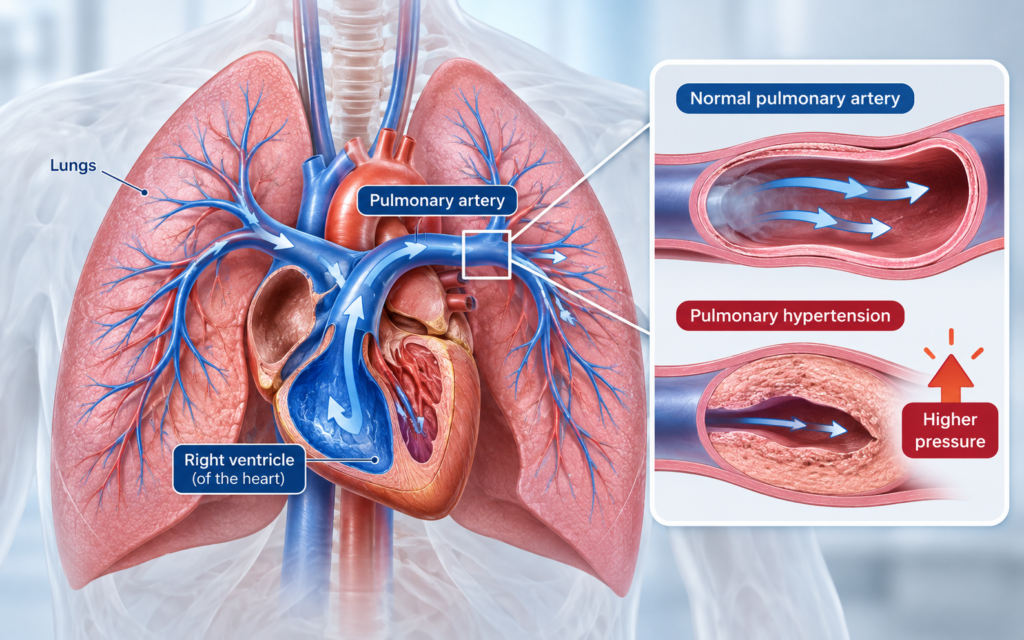
Pulmonary hypertension, sometimes shortened to pulmonary HTN or PH, is elevated blood pressure in the pulmonary arteries, the vessels carrying blood from the heart to the lungs to pick up oxygen. Normal mean pulmonary artery pressure at rest is generally considered to be somewhere between 8 and 20 mmHg. According to the 2022 ESC/ERS clinical guideline, the current definition of pulmonary hypertension is a mean pulmonary artery pressure greater than 20 mmHg at rest, measured through a procedure called right heart catheterization, the gold-standard diagnostic test for this condition.
Functionally, the pulmonary arteries and the right side of the heart work together as a relatively low-pressure system, since blood only needs to travel a short distance to the lungs, unlike the much higher-pressure system the left side of the heart uses to pump blood around the entire body. When pressure in this normally low-pressure pulmonary circuit rises, the right side of the heart has to work considerably harder to push blood through, which over time can lead to right heart strain and, eventually, right heart failure if the underlying pressure elevation isn’t identified and managed.
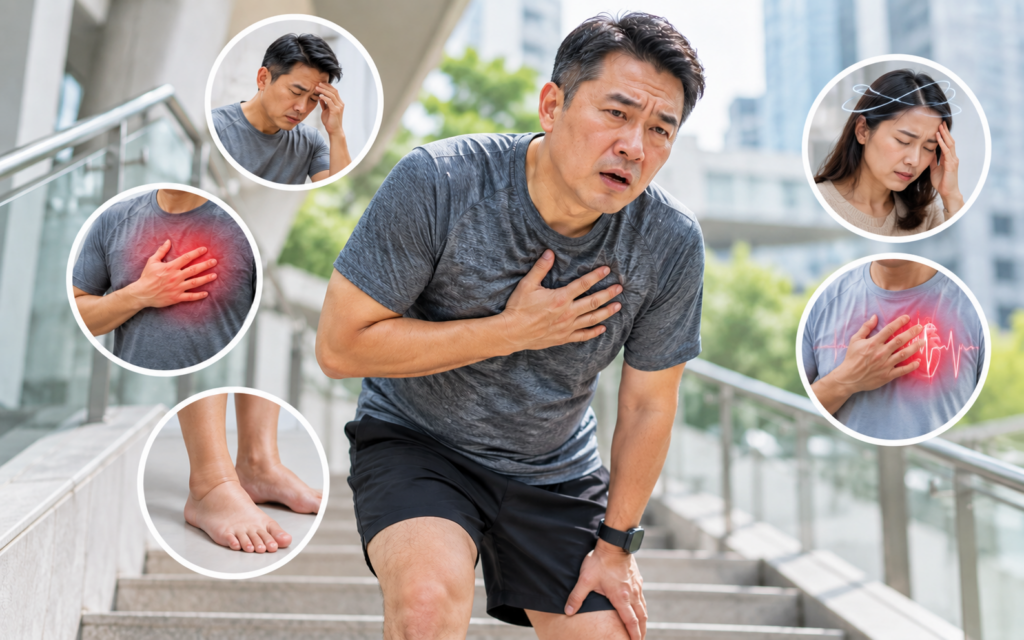
The most common early symptom is shortness of breath, particularly during physical activity, though it often develops gradually enough that it’s easy to attribute to simply being unfit or getting older rather than a specific medical condition. Other common symptoms include:
A key challenge with pulmonary hypertension is that these symptoms are genuinely nonspecific. They overlap heavily with far more common conditions, including general deconditioning, asthma, or ordinary heart disease, which is a major reason diagnosis is often delayed until the condition has progressed further. If breathlessness with exertion is new, persistent, or seems out of proportion to your general fitness level, it’s worth having it properly evaluated rather than assuming it will resolve on its own.
Pulmonary hypertension isn’t one single disease. It’s classified by the World Health Organization into five groups based on the underlying cause, and this classification matters significantly, since treatment differs considerably from one group to another.
Group 1: Pulmonary arterial hypertension (PAH). This is the only group specifically termed pulmonary arterial hypertension, distinct from the broader pulmonary hypertension umbrella. It results from narrowing and remodelling of the small pulmonary arteries themselves, and includes idiopathic PAH (no identifiable cause), heritable forms, and PAH associated with conditions like connective tissue disease, congenital heart disease, or certain drug exposures.
Group 2: Pulmonary hypertension due to left heart disease. The most common overall cause of pulmonary hypertension, arising when problems on the left side of the heart, such as heart failure or valve disease, back up pressure into the pulmonary circulation.
Group 3: Pulmonary hypertension due to lung disease or chronic low oxygen levels. Associated with conditions like COPD, interstitial lung disease, or sleep apnoea, where chronic low oxygen or lung damage contributes to elevated pulmonary pressure over time.
Group 4: Chronic thromboembolic pulmonary hypertension (CTEPH). Caused by blood clots that don’t fully resolve in the pulmonary arteries, physically obstructing blood flow, this type is notable because it’s potentially curable with a specific surgical procedure in eligible patients.
Group 5: Pulmonary hypertension with unclear or multiple causes. A catch-all category for cases linked to other conditions, such as certain blood disorders or metabolic diseases, where the mechanism doesn’t fit neatly into the other four groups.
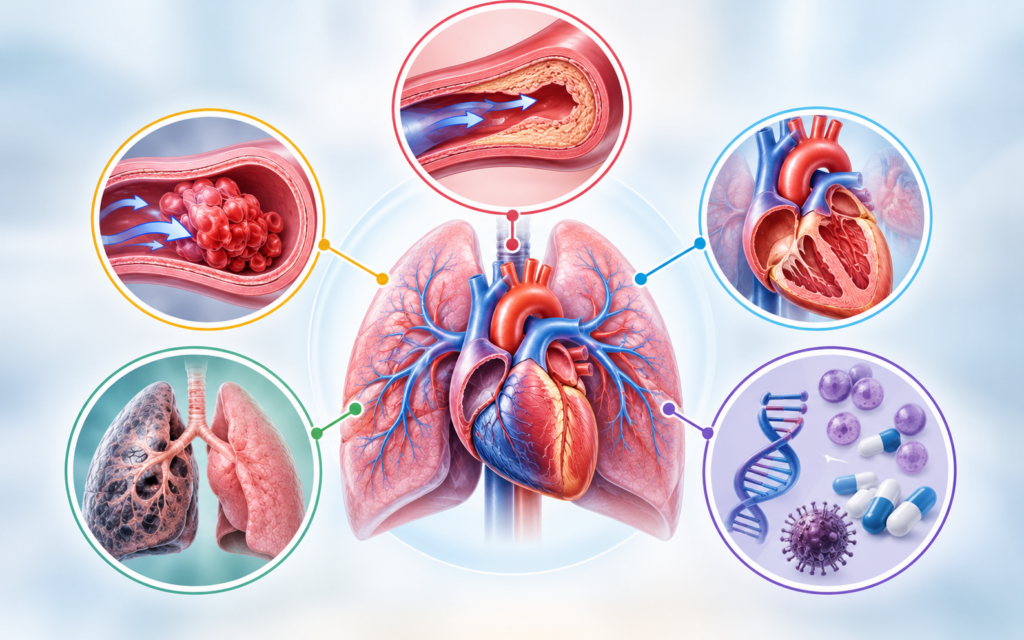
The underlying cause depends heavily on which of the five groups a person’s condition falls into, as outlined above. Broadly, contributing factors and risk factors include:
In many cases, particularly idiopathic PAH, no clear single cause is ever identified, even after thorough evaluation.
There’s currently no cure for most forms of pulmonary hypertension, with chronic thromboembolic pulmonary hypertension (Group 4) being a notable exception, since a specific surgical procedure can be curative in eligible patients. For other groups, treatment generally focuses on managing symptoms, slowing disease progression, and addressing the underlying cause where one exists, rather than reversing the condition entirely.
For Group 1 (PAH) specifically, several classes of medication have been developed to target the processes narrowing the pulmonary arteries, generally prescribed and monitored by a pulmonary hypertension specialist. These broadly include medications that relax and widen the pulmonary blood vessels through different biological pathways, often used in combination rather than alone, with the specific choice and combination guided by disease severity and individual response to treatment.
For Group 2 (left heart disease) and Group 3 (lung disease), treatment generally centres on managing the underlying heart or lung condition itself, since the pulmonary hypertension in these groups is typically a downstream consequence rather than the primary problem to target directly.
For Group 4 (CTEPH), a surgical procedure to remove the obstructing clot material can be curative in suitable candidates, while medication and a newer balloon procedure are options for those who aren’t surgical candidates.
Beyond specific medical treatment, general supportive measures often recommended include supplemental oxygen if blood oxygen levels are low, diuretics to manage fluid retention and swelling, staying up to date with influenza and pneumonia vaccinations, and, for some patients, guidance around pregnancy and certain medications or activities that can worsen the condition. Ongoing monitoring with a specialist is a standard, important part of managing pulmonary hypertension long-term, regardless of which group applies.

High blood pressure in the pulmonary arteries, currently defined as a mean pulmonary artery pressure greater than 20 mmHg at rest, per the 2022 ESC/ERS guideline.
Generally between 8 and 20 mmHg at rest, measured via right heart catheterization.
Shortness of breath with activity, fatigue, chest pain, dizziness or fainting, swelling in the legs or abdomen, and a racing heartbeat, though these symptoms are often nonspecific and easy to mistake for other conditions.
The WHO classifies it into five groups based on cause: pulmonary arterial hypertension, pulmonary hypertension due to left heart disease, due to lung disease or low oxygen, due to chronic blood clots, and due to unclear or multiple causes.
Treatment varies by group. Group 1 uses medications targeting the pulmonary arteries directly, Groups 2 and 3 focus on managing the underlying heart or lung condition, and Group 4 can sometimes be treated surgically.
Pulmonary hypertension is a genuinely complex condition, not a single disease but five distinct types with different causes and different treatment approaches, and its early symptoms are easy to mistake for something more common. If you’re experiencing persistent, unexplained breathlessness or other symptoms described here, particularly if they seem out of proportion to your general health, it’s worth getting properly evaluated rather than assuming it’s simply deconditioning. You can consult a doctor online through MaNaDr App to discuss your symptoms and next steps.