


Dark, velvety patches of skin on the neck, armpits, or other body folds can be alarming to notice, especially since they can look like they should wash off but don’t. This is a fairly common skin finding called acanthosis nigricans, and while it’s not dangerous or contagious on its own, it’s usually a signal worth paying attention to, since it’s often connected to an underlying condition like insulin resistance.
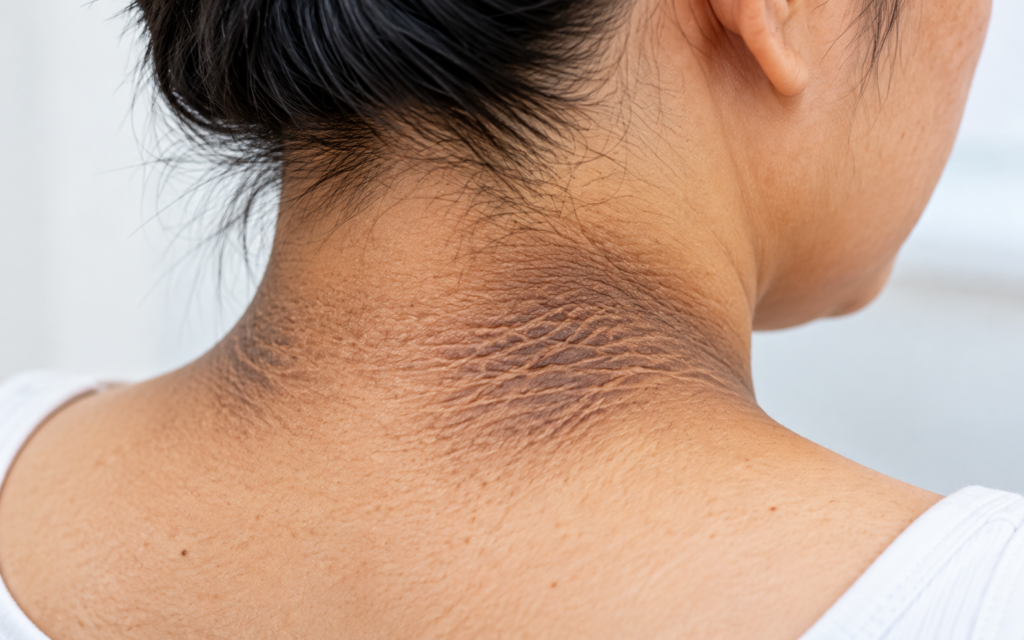
Acanthosis nigricans is a skin condition characterised by darkened, thickened patches of skin with a velvety texture, most commonly appearing in body folds such as the back and sides of the neck, armpits, groin, and sometimes under the breasts, elbows, or knees. It’s not an infection or a hygiene issue; the patches develop from changes in the skin itself and can’t be scrubbed away.
Acanthosis nigricans is generally benign and treatable, but it’s frequently a visible marker of an underlying metabolic, hormonal, or, in rare cases, other medical condition, which is why it’s worth having evaluated rather than treating it as a purely cosmetic issue.
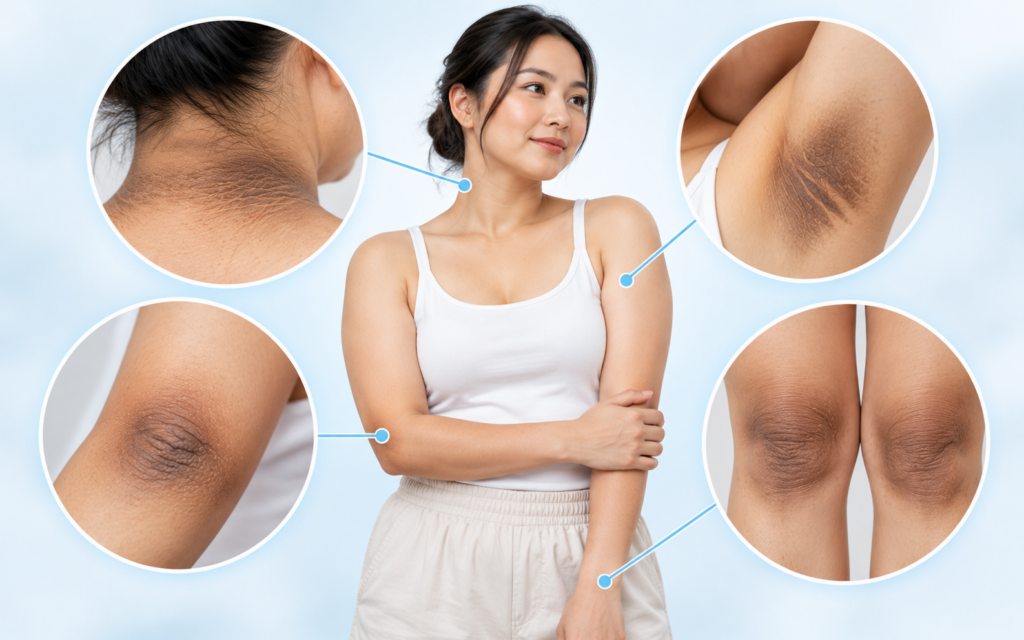
The main sign of acanthosis nigricans is a change in skin appearance and texture, typically:
The patches are usually painless and don’t cause other symptoms, though some people experience mild itching. Symptoms typically develop gradually over time rather than appearing suddenly, though a rapid appearance can sometimes point to a different underlying cause, discussed below.
The most common cause of acanthosis nigricans is insulin resistance, where the body’s cells don’t respond well to insulin, leading to higher circulating insulin levels. This excess insulin is thought to overstimulate skin cell growth, producing the characteristic patches. It’s frequently seen alongside:
Some people develop acanthosis nigricans as part of an inherited condition, or simply due to a genetic tendency, without any underlying metabolic disease. It’s also seen more often in certain genetic syndromes, and can appear in otherwise healthy children and adults with no other health issues.
Certain medications have been associated with acanthosis nigricans as a side effect, including some hormone-based treatments (such as oral contraceptives or growth hormone) and systemic corticosteroids. If you’ve recently started a new medication around the same time symptoms appeared, it’s worth mentioning this to your doctor.
In rare cases, acanthosis nigricans can be linked to an internal cancer, most often gastrointestinal cancers, referred to as malignant acanthosis nigricans. This type is uncommon, but tends to stand out from the more typical presentation by developing rapidly, appearing more extensively (including in unusual sites like the lips or palms), or occurring in someone without the usual risk factors like obesity or diabetes. This isn’t meant to cause alarm, since the large majority of acanthosis nigricans cases are the more common, benign type linked to insulin resistance, but it’s part of why a proper evaluation matters, particularly if the pattern seems unusual.

Acanthosis nigricans is often diagnosed through a simple physical examination, since its appearance is fairly distinctive. A doctor will typically also:
A skin biopsy isn’t usually needed, since the diagnosis can typically be made by appearance and history alone, though it may occasionally be used if the diagnosis is unclear.
The most effective approach to acanthosis nigricans is addressing whatever is driving it, since the skin often improves once the underlying issue is managed:
For people who want to improve the skin’s appearance directly, some options may help, though these treat the visible patches rather than the underlying cause, and are generally viewed as cosmetic rather than curative:
Results vary from person to person, and these treatments generally work best alongside addressing the underlying cause rather than as a standalone fix.

It’s worth seeing a doctor if you notice:
Even in straightforward cases linked to insulin resistance, getting evaluated is worthwhile, since it can be an early opportunity to identify and manage a metabolic condition like prediabetes or type 2 diabetes before it progresses further.
Acanthosis nigricans is a skin condition causing dark, thickened, velvety patches, usually in body folds like the neck, armpits, or groin. It’s often linked to insulin resistance, though it can also be genetic, medication-related, or, rarely, associated with an internal cancer.
The most common cause is insulin resistance, often associated with obesity, type 2 diabetes, metabolic syndrome, or PCOS. Less common causes include genetics, certain medications, and, rarely, an underlying malignancy.
The main symptom is darkened, thickened, velvety skin, typically in body folds such as the neck, armpits, or groin. It’s usually painless, though mild itching can occur.
Treatment focuses on the underlying cause, such as managing insulin resistance or diabetes, or adjusting a medication if it’s the trigger. Cosmetic treatments like topical retinoids, chemical peels, or laser therapy can help the skin’s appearance but don’t address the underlying cause.
Often, yes, particularly when the underlying cause, such as insulin resistance, is effectively managed. However, improvement can take time, and in some cases, some skin changes may persist even after the underlying condition improves.
Acanthosis nigricans is a common, generally benign skin finding, but it’s frequently a useful early signal of an underlying condition like insulin resistance, which is worth identifying and managing rather than treating the skin change as a purely cosmetic issue. Getting it properly evaluated can be a helpful first step toward better metabolic health, alongside options to improve the skin’s appearance if that’s also a concern.
If you’ve noticed dark, velvety patches of skin and would like them assessed, you can consult a doctor online through MaNaDr.