


Amnesia is often portrayed in movies as sudden, complete memory loss with no idea who you are. In reality, it’s more varied and usually more specific than that: amnesia refers to a significant loss of memory that goes well beyond ordinary forgetfulness, and it can affect the ability to recall past events, form new memories, or both, depending on the type and underlying cause.
This guide covers what amnesia actually means, the main types, what typically causes it, how it’s diagnosed, and what treatment usually looks like.

Amnesia is a significant impairment in the ability to recall past events, form new memories, or both. It’s not the same as the mild forgetfulness that can become more common with age, such as occasionally forgetting a name; amnesia refers to a more substantial and noticeable disruption in memory, usually linked to a specific underlying cause, such as a brain injury, illness, or significant psychological stress.
Amnesia can be temporary, resolving once the underlying cause is addressed, or in some cases, it can be longer-lasting or permanent, depending on what caused it and how much of the brain’s memory systems were affected.
These two are sometimes confused, but they’re not the same. Amnesia specifically refers to memory loss. Dementia is a broader condition involving progressive decline across multiple areas of thinking, which may include memory but also affects reasoning, language, judgment, and the ability to carry out daily tasks. In other words, memory loss is a core feature of amnesia, while it’s just one of several symptoms that can occur with dementia.
Amnesia isn’t a single condition; it takes different forms depending on which aspect of memory is affected and what’s causing it.
Anterograde amnesia is the inability to form new memories after the onset of amnesia, while memories from before the event typically remain intact. Someone with anterograde amnesia might be able to recall their childhood clearly but be unable to remember a conversation from earlier that same day. This is sometimes referred to as anterograde memory impairment.
Retrograde amnesia is essentially the reverse: difficulty recalling memories or events from before the onset of amnesia, while the ability to form new memories going forward is generally preserved. In psychology, retrograde amnesia is typically defined as a loss of previously stored memories due to injury, disease, or trauma, as distinct from an inability to encode new ones. Many real cases of amnesia involve some combination of both anterograde and retrograde features, rather than one in isolation.
Dissociative amnesia, sometimes called psychogenic amnesia, involves memory gaps for important personal information, usually related to a traumatic or highly stressful experience, without a clear physical brain injury as the cause. It’s classified as a dissociative disorder rather than a result of structural brain damage, and it’s thought to be the mind’s way of shielding itself from overwhelming distress.
Because dissociative amnesia is often linked to trauma, it can sometimes occur alongside significant emotional distress. If you or someone you know is experiencing thoughts of self-harm alongside memory gaps, this needs urgent attention. In Singapore, you can reach the Samaritans of Singapore (SOS) 24-hour hotline at 1-767, or the National Care Hotline at 1800-202-6868.
Post-traumatic amnesia refers to a period of confusion and memory disruption that occurs immediately after a traumatic brain injury. During this period, a person may be disoriented, unable to recall their name or surroundings, and unable to form new memories, even though they may appear otherwise awake and responsive. Post-traumatic amnesia is generally considered to have resolved once continuous, day-to-day memory returns.

Infantile amnesia refers to the near-universal inability of adults to recall memories from very early childhood, typically before around ages 3 to 4. This isn’t considered a disorder; it’s a normal part of how memory develops, related to how the brain’s memory-forming structures mature over the first few years of life.
A few other patterns are also sometimes described, including transient global amnesia, a temporary and usually short-lived episode of memory disruption, often in older adults, with no clear lasting cause identified in many cases. As with the other types above, any new or unexplained episode of significant memory loss should be evaluated by a doctor rather than assumed to be one specific type.
Symptoms vary depending on the type and cause, but commonly include:
Amnesia on its own doesn’t typically affect a person’s general intelligence, awareness, attention, or personality, which is part of what distinguishes it from broader conditions like dementia.
Amnesia generally results from damage or disruption to brain structures involved in forming or retrieving memories, particularly the hippocampus and surrounding areas, or from significant psychological stress in the case of dissociative amnesia. Common causes include:
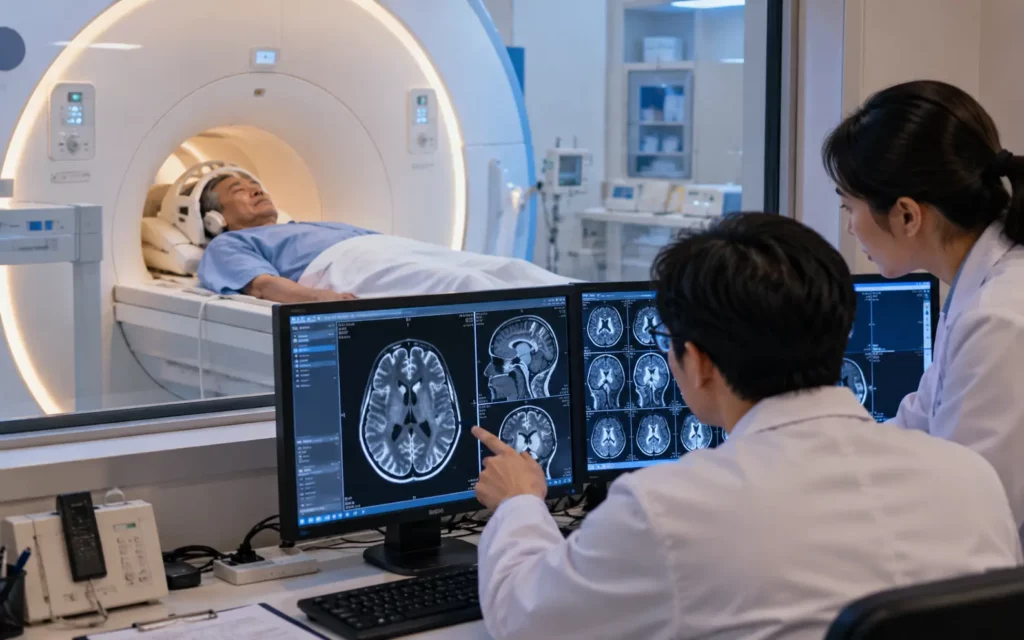
There’s no single test for amnesia; diagnosis usually involves a combination of approaches to understand the pattern of memory loss and identify an underlying cause:
Treatment for amnesia depends heavily on the underlying cause, and there’s currently no medication that directly restores lost memories. Instead, treatment generally focuses on:
In some cases, especially where amnesia results from a temporary or reversible cause, memory can improve significantly over time. In other cases, particularly where there’s significant structural brain damage, some degree of memory loss may be permanent.

You should see a doctor promptly if you or someone you know experiences:
Even when amnesia seems mild or temporary, a doctor’s evaluation helps identify the underlying cause and rule out anything that needs prompt treatment.
Amnesia is a significant impairment in the ability to recall past memories, form new ones, or both, that goes beyond ordinary forgetfulness and is usually linked to a specific underlying cause.
Yes. Infantile amnesia, the inability to recall memories from very early childhood, is considered a normal part of how memory develops and isn’t a disorder.
There’s no medication that directly restores lost memories. Treatment instead focuses on addressing the underlying cause where possible, along with cognitive rehabilitation and supportive strategies to help manage daily life.
Amnesia covers a range of memory conditions, from temporary and reversible to longer-lasting, depending on the underlying cause. Because the causes range from head injury and stroke to significant psychological stress, any new or unexplained memory loss is worth having properly evaluated rather than assumed to be one specific type.
If you or a loved one is experiencing unexplained memory loss, you can consult a doctor online through MaNaDr to discuss your symptoms and next steps.