


Losing control over a bowel movement, even occasionally, can feel isolating, and many people put off mentioning it to anyone, including a doctor. Fecal incontinence can affect both women and men and has many possible causes. Treatment depends on what is contributing to the loss of bowel control, so new, recurrent or persistent leakage is worth discussing with a doctor.

Fecal incontinence, also called bowel incontinence, is the involuntary loss of liquid or solid stool. It can range from occasional leakage that stains underwear to a more significant loss of bowel control. Some people may also have difficulty controlling gas. Fecal incontinence is a symptom with several possible underlying causes rather than a disease on its own.
Continence, the ability to control when and where you pass stool, depends on several things working together: the rectum’s ability to stretch and signal that it’s full, the anal sphincter muscles (a ring of internal and external muscles that tighten to hold stool in), the pelvic floor muscles that support the rectum, and the nerves that coordinate all of this. Fecal incontinence usually results from a problem with one or more of these parts, rather than a single simple cause.
Fecal incontinence can show up in different ways. Patterns of bowel leakage include:
Other related symptoms include:
Symptoms can range from occasional, minor episodes to frequent, more significant loss of control, and the pattern often gives a doctor useful clues about the underlying cause.
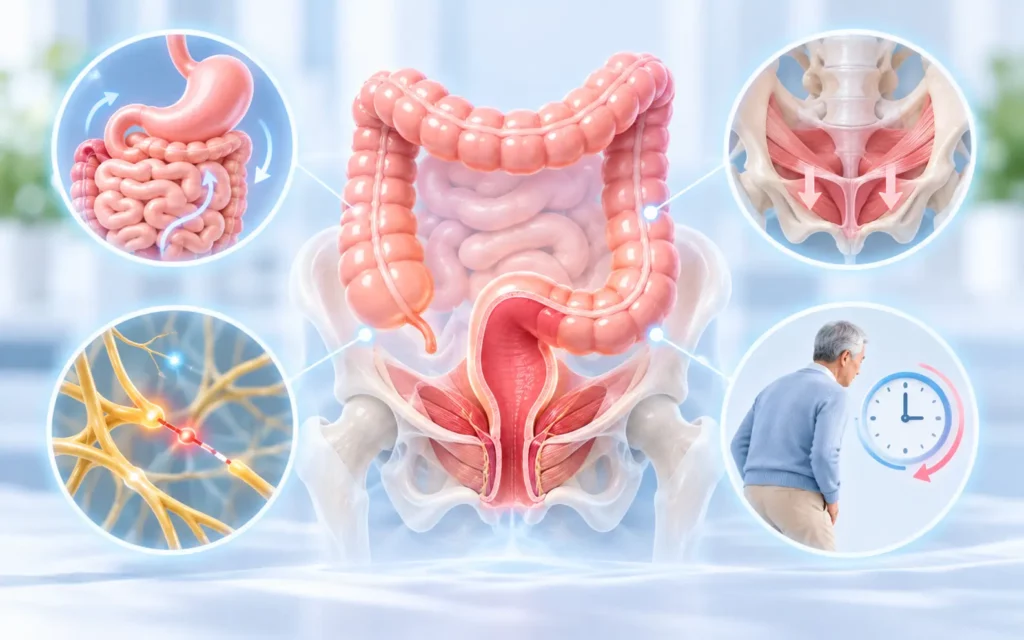
Fecal incontinence usually results from damage, weakness, or dysfunction somewhere in the system that controls bowel movements. Common causes include:
Vaginal childbirth can contribute to fecal incontinence when the pelvic floor, nerves or anal sphincter are stretched or injured during delivery. Risk can be higher when an anal sphincter injury or significant perineal tear occurs. Symptoms may appear after delivery or become noticeable later. Pelvic surgery and radiation treatment in the pelvic area can also contribute to bowel-control problems.
In men, fecal incontinence is more often linked to prior anal or rectal surgery, nerve-related conditions, or chronic bowel conditions, rather than childbirth-related injury. Shared risk factors for both men and women include older age, obesity, chronic diarrhea or constipation, and neurological conditions that affect nerve signalling to the pelvic floor.
Bowel leakage by itself does not mean you have colorectal cancer. Fecal incontinence has many other possible causes, including diarrhea, constipation, pelvic floor or anal sphincter problems, and neurological conditions.
However, changes in bowel control can sometimes occur alongside colorectal or rectal disease, and bowel leakage can also occur after treatments such as pelvic surgery or radiation. Speak to a doctor if new or unexplained leakage occurs with rectal bleeding, unexplained weight loss, persistent abdominal symptoms or a lasting change in bowel habits. A doctor can assess whether further investigation is needed.
A doctor will usually start by asking about your symptoms and medical history, including how often leakage happens, whether it involves liquid or solid stool, your bowel habits, childbirth history if relevant, past surgeries and other medical conditions. A physical examination may also be needed. Further tests depend on the suspected cause and severity of the symptoms, and not everyone needs specialised investigations. These may include:
Being open about the specifics, however embarrassing they may feel, helps a doctor identify the cause more quickly and recommend the right treatment.

Treatment depends on the underlying cause and how significant the symptoms are, and often combines a few approaches:
Many people can improve with treatment, but the response depends on the underlying cause and severity of the symptoms.

Speak to a doctor if bowel leakage is new, recurrent, persistent or affecting your daily life. Seek prompt medical assessment if you have:
You do not need to wait until symptoms become severe before raising them with a doctor. Seek urgent medical attention if loss of bowel control starts suddenly together with new leg weakness or numbness, numbness around the buttocks or genital area, or difficulty controlling or passing urine, as these symptoms can indicate a serious problem affecting the nerves or spine.
Fecal incontinence, or bowel incontinence, is the involuntary leakage of liquid or solid stool. It can range from minor staining to a more significant loss of bowel control. Some people may also have difficulty controlling gas, and the underlying cause varies from person to person.
Common causes include diarrhea, chronic constipation, damage to the anal sphincter or pelvic floor (including from childbirth or surgery), nerve damage from conditions like diabetes or stroke, and inflammatory or functional bowel conditions.
Vaginal childbirth can contribute to bowel incontinence if the pelvic floor, nerves or anal sphincter are stretched or injured during delivery, particularly when an anal sphincter injury or significant perineal tear occurs. Symptoms may appear after delivery or become noticeable later.
Bowel leakage by itself does not mean you have colorectal cancer. There are many other possible causes, including diarrhea, constipation, pelvic floor or anal sphincter problems and neurological conditions. New or unexplained leakage should be assessed, particularly if it occurs with rectal bleeding, unexplained weight loss or a persistent change in bowel habits.
Treatment often starts with dietary changes, managing diarrhea or constipation, bowel training, and pelvic floor exercises, sometimes with biofeedback therapy. Medication or surgery may be recommended for more persistent or severe cases.
Symptoms can improve substantially in some people, but the outcome depends on the underlying cause and severity. A doctor can help identify contributing factors and discuss which treatment options are appropriate.
Fecal incontinence has many possible causes, including changes in stool consistency, constipation, pelvic floor or anal sphincter problems and neurological conditions. Treatment depends on the cause, and options can range from dietary and bowel-management strategies to pelvic floor therapy, medication and specialist procedures.
If you have noticed bowel leakage, you can consult a doctor through MaNaDr App for an initial assessment of your symptoms and medical history. Depending on your symptoms, the doctor may recommend an in-person examination, further tests or specialist assessment.