


Alongside cramps, mood swings, and bloating, many people notice the number on the scale creep up around their period – and then quietly disappear again a few days later. This is a well-documented, normal part of the menstrual cycle for most people. Here’s how much weight gain is typical, why it happens, and how to tell it apart from actual fat gain.

Yes, but with an important clarification: your period itself doesn’t cause weight gain – the hormonal changes leading up to it do, and what shows up on the scale is water, not fat. After ovulation, progesterone becomes the dominant hormone in your cycle (a phase called the luteal phase), and rising progesterone triggers a hormone called aldosterone, which signals your kidneys to hold onto more sodium and water. This is the main driver of period-related weight gain, alongside a few contributing factors:
It’s also worth knowing that not everyone experiences this the same way – some studies have found no significant menstrual-cycle-related weight change at all in certain individuals, so if you don’t notice this pattern, that’s normal too.
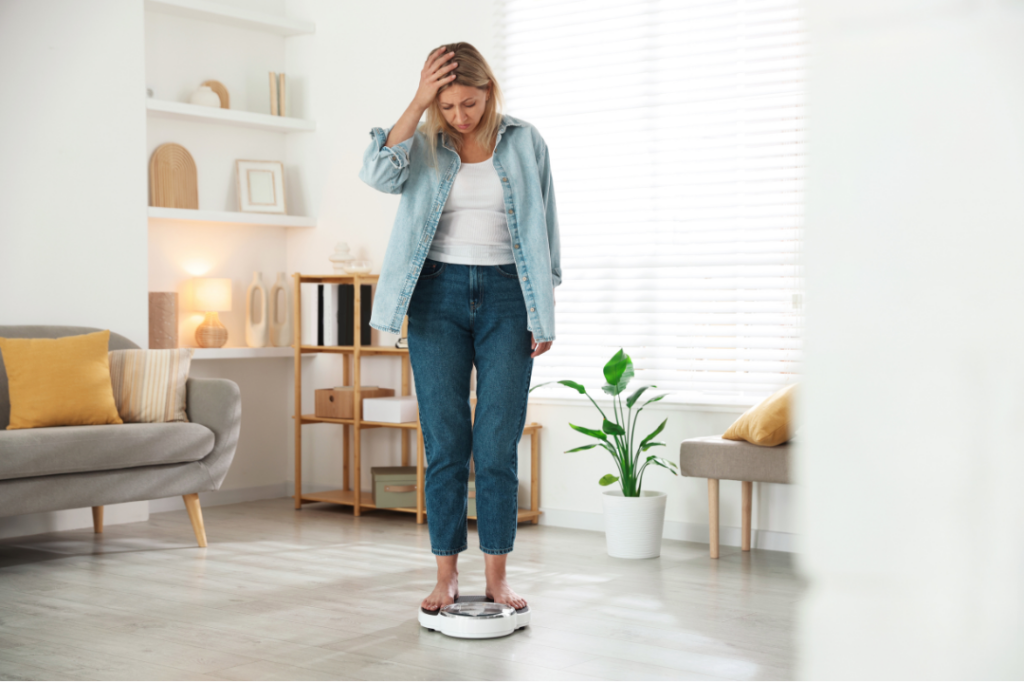
Most research points to a typical range of 1 to 5 pounds (about 0.5–2.3 kg), though study averages often land closer to just 1 pound, with individual experiences varying quite a bit. A minority of people report gaining more – occasionally up to around 10 pounds (roughly 4.5 kg) in cases of more pronounced water retention, though this is on the higher end rather than typical.
Importantly, this isn’t fat gain – it’s overwhelmingly water weight, caused by hormonal shifts rather than any change in body fat. It typically builds gradually through the week or two before your period, often peaking right before or during the first couple of days of bleeding, and resolves within about 3 to 5 days after your period starts.
Yes, entirely normal. Weight fluctuations of a few pounds tied to your menstrual cycle are a well-documented, common experience – research suggests water retention affects the large majority of people who menstruate to some degree during the luteal phase. Feeling like your rings are tighter, your abdomen looks more swollen, or the scale has crept up slightly in the days before or during your period isn’t a sign that anything is wrong; it’s a temporary, hormonally-driven pattern that resolves on its own.
That said, “normal” has some limits. If you consistently gain significantly more than 5 pounds, the weight doesn’t go back down within about a week of your period starting, or the pattern feels different from what’s typical for you, it’s worth mentioning to a doctor rather than assuming it’s always just water weight.
This is actually when most period-related weight gain happens – a distinction the “during your period” framing often misses. The luteal phase (the one to two weeks between ovulation and your period) is when progesterone peaks, driving the water retention, bloating, and appetite changes described above. Research on this specifically suggests an average of around 1 pound gained in the week before menstruation for many people, building toward the higher end of the 1–5 lb range by the time your period actually starts.
This premenstrual weight gain is one of several common PMS symptoms, alongside mood changes, breast tenderness, and fatigue – and like the others, it’s driven by the same hormonal shift, not a change in your diet or habits (unless cravings genuinely have led to eating more).
Across a full cycle, most people’s weight follows a fairly predictable pattern: relatively stable during the follicular phase (the first half of the cycle, from your period through ovulation), gradually increasing through the luteal phase as progesterone rises, peaking around the start of your period, and then returning to baseline within the first week of bleeding. Over months and years, this cyclical pattern doesn’t translate into a genuine upward trend in body weight for most people – it’s a repeating fluctuation, not cumulative gain.
Certain underlying conditions can affect this pattern, though. Women with polycystic ovary syndrome (PCOS) may experience more pronounced weight-related symptoms due to broader hormonal imbalances, and thyroid disorders – particularly if not well-controlled – can also affect weight independently of the menstrual cycle. If your cycle-related weight changes seem unusually large or are trending upward over time rather than resolving each month, it’s worth discussing with a doctor through the MaNaDr app to check whether an underlying condition might be involved.

While you can’t fully prevent hormonally-driven water retention, a few habits can help minimise its impact:
If period-related weight changes are significantly affecting your quality of life, speaking with a doctor on the MaNaDr app can help you build a broader plan that accounts for your cycle, rather than treating it as a separate issue from general weight management.
Typically 1–5 pounds (0.5–2.3 kg), with study averages often closer to about 1 pound – almost entirely water weight, not fat.
Yes – this is actually when most period-related weight gain happens, driven by rising progesterone in the luteal phase (the week or two before your period).
Yes, typically within 3–5 days of your period starting, as hormone levels shift and water retention resolves.
Almost entirely water, caused by hormone-driven sodium and fluid retention – not an increase in body fat.
If it’s consistently more than about 5 pounds, doesn’t resolve within a week of your period starting, or feels different from your usual pattern – worth checking with a doctor to rule out conditions like PCOS or a thyroid disorder.
Gaining a few pounds around your period is a normal, well-documented part of the menstrual cycle for most people – driven by hormone-related water retention in the luteal phase, not fat gain, and it reliably resolves within a few days once your period starts. Understanding this pattern can make the monthly scale fluctuation feel a lot less alarming. If your experience seems significantly outside this typical range, or you’d like support managing symptoms, you can consult a doctor through the MaNaDr app to talk it through.