


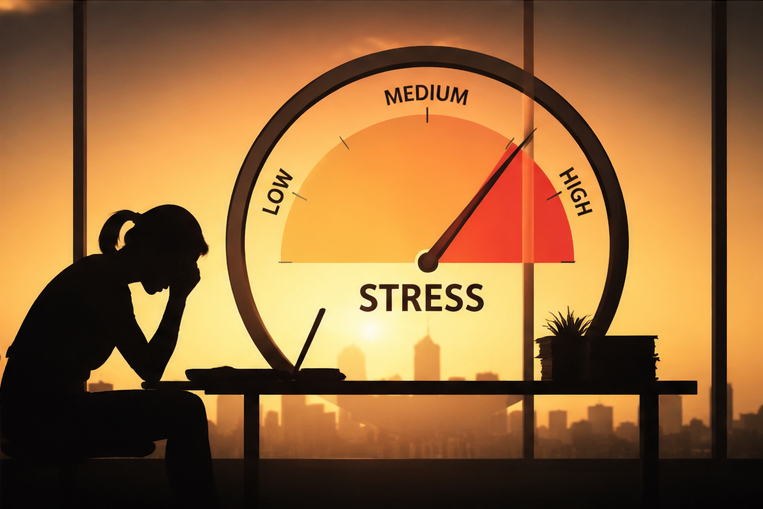
Modern work life can be a constant juggle. Deadlines loom, pressure mounts and the feeling of being overwhelmed becomes a familiar companion. These factors contribute to a significant issue: occupational stress.

The U.S. National Institute for Occupational Safety and Health (NIOSH) defines occupational (or job) stress as the harmful physical and emotional responses that occur when the demands of a job far exceed the resources and capabilities of the worker. It’s a growing concern, impacting not just employee well-being but also company productivity and morale. It’s worth distinguishing stress from healthy challenge – a degree of challenge at work can be motivating and energising, while stress arises specifically when demands consistently outpace what a person feels able to manage.

Several factors can contribute to occupational stress. Here are some of the most common culprits:
Heavy Workload and Long Hours: Feeling constantly overloaded with work and having to put in long hours can be a major source of stress.
Lack of Control: Feeling like you have little control over your workload, schedule, or decision-making can be incredibly frustrating and stressful.
Poor Work-Life Balance: When work bleeds into your personal life, it becomes difficult to relax and recharge, leading to burnout.
Job Insecurity: The fear of losing your job can be a constant source of anxiety.
Toxic Workplace Dynamics: Dealing with a difficult boss, bullying colleagues, or a hostile work environment can take a major toll on your mental health.
Poorly designed job tasks: Repetitive, unclear, or poorly structured work – lacking variety or meaningful use of a worker’s skills – is also recognised by NIOSH as a contributing factor.
Work-related stress is a genuine and widespread concern locally. The 2022 National Population Health Survey found that 17% of Singapore residents aged 18–74 experienced poor mental health, and Singapore’s Ministry of Manpower (MOM), together with SNEF and NTUC, has explicitly recognised work stressors as a contributing factor in its 2023 Tripartite Advisory on Mental Well-Being at Workplaces. Separately, industry surveys have found a majority of Singapore employees report experiencing workplace stress on a regular basis, with many saying it affects their ability to work effectively – underscoring that this isn’t a niche concern, but a mainstream workplace health issue.

Chronic occupational stress can contribute to a range of physical symptoms and, over time, more serious health conditions:
Mentally, chronic occupational stress is associated with:

Beyond individual health, chronic stress tends to affect the areas around it:
Fortunately, there are steps you can take to combat occupational stress:
Talk to Your Employer: If you’re feeling overwhelmed, speak to your manager or HR representative. Discuss your concerns and explore ways to manage your workload better.
Set Boundaries: Learn to say no and establish clear boundaries between your work and personal life. Disconnect after work hours and avoid checking work emails outside of work time.
Prioritize Self-Care: Your physical and mental well-being are crucial. Engage in activities you enjoy, get enough sleep, eat healthy meals, and exercise regularly. Relaxation techniques like yoga and meditation can also be helpful.
Seek Professional Help: If you’re struggling to cope with occupational stress on your own, don’t hesitate to seek professional help. A therapist can teach you coping mechanisms and help you develop strategies for managing stress.
It’s worth speaking with a doctor or mental health professional if stress-related symptoms persist for more than a couple of weeks, start affecting your physical health, relationships, or ability to function day to day, or if you notice signs of burnout that aren’t improving despite trying to manage them yourself. If you ever have thoughts of harming yourself, it’s important to reach out for help immediately – speaking with a doctor, a trusted person, or a mental health helpline can provide the right support.
The harmful physical and emotional response that occurs when job demands exceed a worker’s capabilities, resources, or needs – as defined by NIOSH.
Heavy workload, low control over one’s work, poor work-life balance, job insecurity, toxic workplace dynamics, and poorly designed job tasks.
It’s linked to headaches, muscle tension, digestive issues, sleep disturbances, and, over time, increased risk of cardiovascular disease and musculoskeletal disorders.
Not on its own, but chronic occupational stress is a recognised contributor to anxiety, depression, and burnout, which the WHO classifies as an occupational phenomenon.
It’s a widespread concern – government data shows meaningful rates of poor mental health among residents, and MOM has formally recognised work stressors as a contributing factor in its workplace mental health guidance.
Occupational stress is a genuine health issue, not just an inevitable part of working life – it affects physical health, mental health, work performance, and relationships alike. Recognising your own stressors, setting boundaries, and knowing when to ask for support are all meaningful steps toward managing it. If occupational stress is affecting your wellbeing and self-management strategies aren’t enough, consult a licensed doctor via the MaNaDr app to talk through what you’re experiencing and get guidance on next steps, including a referral to a mental health professional if appropriate.