


It is undeniable that keratin has many wonderful effects on the strength and smoothness of hair. However, without understanding the side effects of keratin treatment for hair, your health will be adversely affected. Therefore, you should consider and read the instructions carefully before using them.
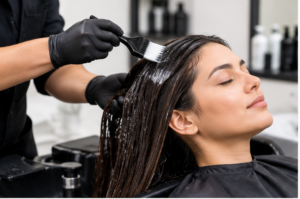
Keratin is a key protein found in our hair that is produced naturally. It protects and maintains the health of your hair by acting as an exterior protective and inside the structural protein. The keratin in your hair is lost as a result of exposure to external elements such as the sun, pollution, or chemicals, as well as changes in your lifestyle, leading to dry, damaged, and lifeless hair.
A keratin treatment smoothes and shines frizzy hair via a chemical technique. Keratin is chemically added to the hair during a keratin treatment to make it seem smooth, lustrous, and frizz-free, making it immensely popular among women and men. These treatments fill up the porosity patches in your hair that has developed as a result of keratin loss. Frizz, knots, and breakage are all caused by too porous hair. A keratin treatment simply rebuilds your hair by replacing the protein that has been lost in your strands.
This was one of the first keratin treatments to be created and introduced in Brazil in 2005. By coating strands in a protective protein layer, it removes frizz and smoothes the hair cuticle. Its effects might continue for up to three months.
This keratin hair treatment is the most natural and formaldehyde-free option. Cezanne is ideal for fine hair since it not only reduces frizz but also nourishes strands that have been damaged. If you have colored hair, you should avoid this since it might cause your blonde to fade.
These keratin hair treatments are the easiest to apply. They’re ideal for those who have thick hair that’s been damaged or dyed. The amount of times each strand is flat-ironed affects the softness of the curl texture. The procedure doesn’t lessen hair color, but it does make it manageable and keeps it in place in hot and humid conditions.
This is a quick treatment that involves applying keratin serum to the hair and sealing it with a blow dryer and flat iron. It’s perfect for people who have wavy or curly hair and want to make it more manageable. It might take up to six weeks for the effects to wear off.
The Japzilian combines Brazilian keratin treatment with a Japanese hair straightening system to provide results that last five months longer than the Brazilian blowout. Curls are first loosened with the Brazilian treatment, then sealed with the Japanese treatment, which closes the cuticle and keeps frizz at bay. Hair is brushed through with a Japanese straightening perm, and coarse strands are treated twice. After an hour, the hair is washed and blow-dried one more for smooth hair that air-dries absolutely straight.
A full salon keratin treatment typically takes 2 to 4 hours, though longer or thicker hair can take up to 6 hours. The general process involves a clarifying wash to strip product buildup, section-by-section application of the keratin solution, a processing period (often 20–60 minutes) for the solution to set, and finally sealing it in with a flat iron. Faster “express” versions exist but generally trade off some longevity for speed.
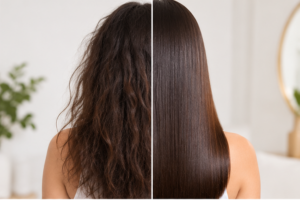
Most keratin treatments last somewhere between 2 and 6 months, depending on the specific formula, your hair type, and how well you care for it afterward (many stylists recommend sulphate-free shampoo and avoid washing for the first 2–3 days). Traditional, formaldehyde-containing treatments tend to last on the longer end of this range, while formaldehyde-free versions are sometimes slightly shorter-lasting, though this varies by brand and has narrowed considerably as formulations have improved.
By smoothing the hair cuticle, keratin treatments can make hair appear fuller, shinier, and less frizzy, while making curly or wavy hair more manageable and straighter-looking.
Many people find their hair dries noticeably faster after a keratin treatment, and needs less heat styling to look smooth – which can, in turn, reduce cumulative heat damage over time.
Not directly – this is worth clarifying, since it’s a common assumption. Hair growth happens at the follicle, beneath the scalp, and keratin treatments have no effect on that process. What keratin treatments can do is reduce breakage along the hair shaft, meaning less of your hair’s natural growth is lost to split ends and snapping. Over time, this can mean your hair appears to grow faster simply because more of it is being retained as visible length – but the underlying growth rate itself is unchanged.

The most significant concern with traditional keratin treatments is formaldehyde exposure. Many salon keratin treatments release formaldehyde during the heat-sealing process – a peer-reviewed study found formaldehyde levels during these treatments to be roughly five times higher than the national safety threshold for occupational chemical exposure, posing a particular risk to salon workers exposed repeatedly over time, alongside clients during the appointment itself. Reported effects include nosebleeds, respiratory irritation, and eye or throat discomfort.
Not typically on its own, but repeated exposure to high heat during application and styling can weaken hair over time and increase breakage, which is a different issue from hair loss at the follicle. If you notice unusual shedding after a treatment, it’s worth having it assessed rather than assuming it’s expected.
The chemicals involved can cause scalp irritation, dryness, or sensitivity in some people, which may look similar to dandruff, though it isn’t the same as true dandruff (which is typically related to a yeast overgrowth on the scalp). If scalp irritation persists after a treatment, it’s worth getting checked rather than continuing to use products that may be aggravating it.
If you experience persistent respiratory symptoms, a skin reaction, or scalp irritation after a keratin treatment, you can consult a doctor through the MaNaDr app to get it properly assessed.
Given the formaldehyde exposure risk, keratin treatments are generally not recommended for:
If you’re pregnant or have a respiratory condition and are considering a keratin treatment, it’s worth checking with your doctor first – you can consult one through the MaNaDr app if you’d like guidance specific to your situation.
Generally, yes, though results tend to be less dramatic than a professional treatment, since at-home formulas are usually lower in strength. To use one safely: check the ingredient list before buying, follow instructions precisely, ensure good ventilation while applying and heat-styling, and consider a patch test first if you have sensitive skin. Professional-grade products meant for salon use shouldn’t be used at home, as they typically require expert application and stronger heat tools to process safely.
If you’d rather avoid chemical treatments altogether, a few other options can help manage frizz:
This time-consuming keratin treatment, often known as the Brazilian keratin treatment, entails multiple phases. First, a formaldehyde-containing lotion is applied to your hair before it is blown dry and straightened at a salon. After applying the treatment, you are encouraged to leave your hair dry for several days. When you go to the salon to have the chemicals removed, another treatment is used to set the straightening result. This therapy is supposed to last 12 weeks.
When a keratin-infused styling serum is applied while the hair is still wet, it not only makes the hair glossy and smooth but also reduces drying time.
Keratin shampoos and conditioners can make hair stronger, more resistant to harm and restore hair that has been dried out by heat and hair color.
Use a keratin-infused hair mask to help restore color-treated or heat-damaged hair for ultra-dry and damaged locks. Apply this mask to damp hair once a week and let it in for 5 minutes. Rinse thoroughly and style as usual.
Keratin supplements are available as powder or capsules. Supplementing with keratin carries certain hazards. They might cause too much protein to build up in your body if used excessively.
Not directly – it doesn’t affect hair growth at the follicle. It reduces breakage, so more length is retained over time, which can look like faster growth.
Typically 2–6 months, depending on the specific formula, your hair type, and post-treatment care.
Not typically directly, though repeated heat exposure can increase breakage over time. Unusual shedding after a treatment is worth having checked.
They’re generally not recommended during pregnancy, given the formaldehyde exposure risk – worth discussing with your doctor first.
Keratin treatments can genuinely transform frizzy, hard-to-manage hair – smoother, shinier, and faster to style – but they come with real chemical exposure risks worth taking seriously, particularly around formaldehyde. Understanding what’s actually in the product you’re using, checking in with your doctor if you’re pregnant or have a respiratory condition, and considering formaldehyde-free or non-chemical alternatives if you’d rather avoid the risk are all reasonable ways to make a more informed choice.