



Every time you see a doctor, whether you book a teleconsultation from your sofa or walk into a neighbourhood clinic, your medical records grow: your symptoms, your medications, your medical history. It’s natural to wonder: who can see your medical records in Singapore, and how are they kept safe?
In Singapore the answer is reassuring, but it helps to understand how it actually works, especially now that care happens across both online and in-person settings. This guide explains what counts as your health records in Singapore, who is allowed to access them, how the PDPA protects them, what rights you have, and a few simple habits that keep your information secure. Wherever you’re treated, including on MaNaDr, the same protections follow you.
Your medical records are more than a doctor’s scribbled notes. In practice they include:
All of it is personal data about your health, one of the most sensitive categories of information there is, which is exactly why access to medical records in Singapore is deliberately limited and governed by law.
Most patients today move between two worlds:
These are separate settings with their own systems: an online consult doesn’t automatically appear in every clinic’s records, and vice versa. What they share is a common rulebook for protecting your health records. Knowing that rulebook is the key to feeling confident in both. If you’re new to online care, it’s worth first understanding whether telemedicine is safe in Singapore before your first video visit, and why telemedicine has grown in Singapore covers the basics of how it works and who it’s for.

This is the question most patients really want answered: who can access my medical records? As a general rule, access is meant to be limited to the people directly involved in your care:
Your medical records are not meant to be shared freely for marketing or sold on. Employers, insurers and family members don’t get automatic access, generally they need your explicit consent. If you’re ever unsure, you’re entitled to ask any provider how your information is used, stored and who it’s shared with.
Two things work together to keep your information safe:
For clinics, meeting these obligations isn’t optional, but it’s part of running a compliant practice. If you’re curious about exactly what a clinic is required to do with your data, here is a clear breakdown of the data-protection rules clinics must follow. For you as a patient, the takeaway is simple: behind the convenience of modern care sits a real framework designed to protect you.
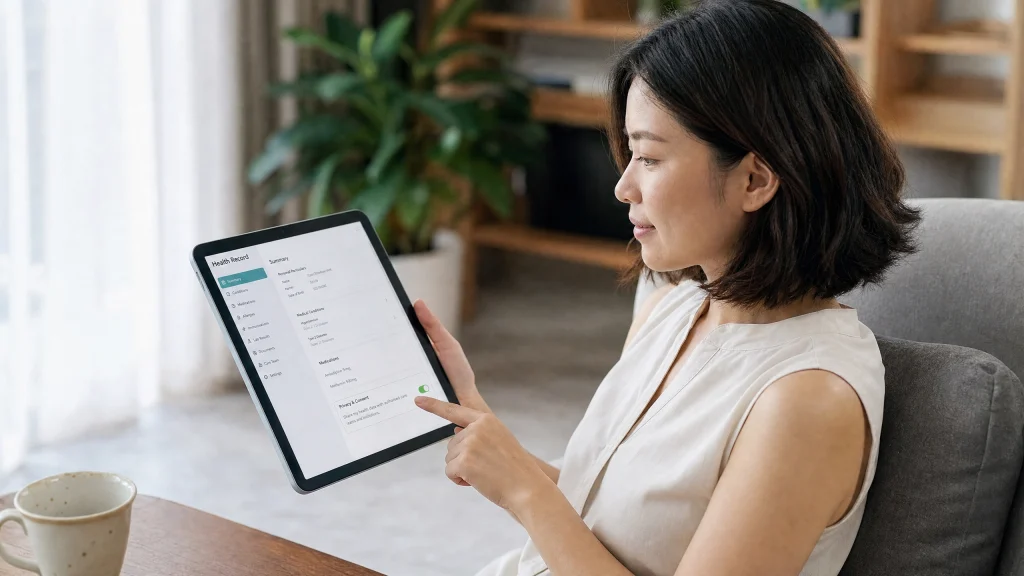
This is the question most patients really want answered: who can access my medical records? As a general rule, access is meant to be limited to the people directly involved in your care:
Your medical records are not meant to be shared freely for marketing or sold on. Employers, insurers and family members don’t get automatic access, generally they need your explicit consent. If you’re ever unsure, you’re entitled to ask any provider how your information is used, stored and who it’s shared with.
Two things work together to keep your information safe:
For clinics, meeting these obligations isn’t optional, but it’s part of running a compliant practice. If you’re curious about exactly what a clinic is required to do with your data, here is a clear breakdown of the data-protection rules clinics must follow. For you as a patient, the takeaway is simple: behind the convenience of modern care sits a real framework designed to protect you.
Under the PDPA, you generally have the right to:
You can also expect to be told if something goes wrong because Singapore requires organisations to notify affected individuals and the authorities of significant data breaches within set timelines. In short, access to your medical records isn’t a black box: you have real, enforceable rights over your own health information.
A common surprise: seeing a doctor online and later visiting a clinic in person doesn’t automatically merge into one file. Whether your medical records stay together depends on the systems your providers use. If a clinic runs both its online and in-person care on the same system, your record stays unified; if the two sit on different systems, they may be held separately, so it’s worth knowing how your record behaves if you split care across settings. And if you often order medicine after a consult, see how records tie in when getting an online prescription in Singapore, which explains whether a clinic can see that prescription at a later in-person visit.

You shouldn’t have to choose between convenient care and keeping your health data private in Singapore, you get both. Whether you consult online or in person, your medical records are protected by law (the PDPA) and by the safeguards responsible providers put in place, and access is limited to the people involved in your care unless you consent otherwise.
If you’d like to speak to a doctor from home, you can consult trusted, licensed doctors on the MaNaDr App, with your privacy taken seriously at every step.
Generally only the providers and clinical/support staff directly involved in your care, plus anyone you consent to, or where the law specifically permits access (such as certain public-health or legal requirements). Employers and insurers usually need your explicit consent.
Yes. Telemedicine providers must comply with the Personal Data Protection Act (PDPA) and healthcare data-protection requirements, just like physical clinics.
Under the PDPA you can ask what data is held about you, request corrections, and withdraw consent for uses beyond your direct care, within legal limits.
Generally yes, because under the PDPA you can make an access request to the provider holding your records. They may apply reasonable process and fees, and there are limited legal exceptions, but your records aren’t off-limits to you.
Not automatically, but it depends on your provider. If a clinic runs both its online and in-person care on the same system, your records stay together; if not, they may be held separately, so it helps to ask before you assume a new doctor has your full history. It’s still helpful to keep your own summary of key conditions and medications.